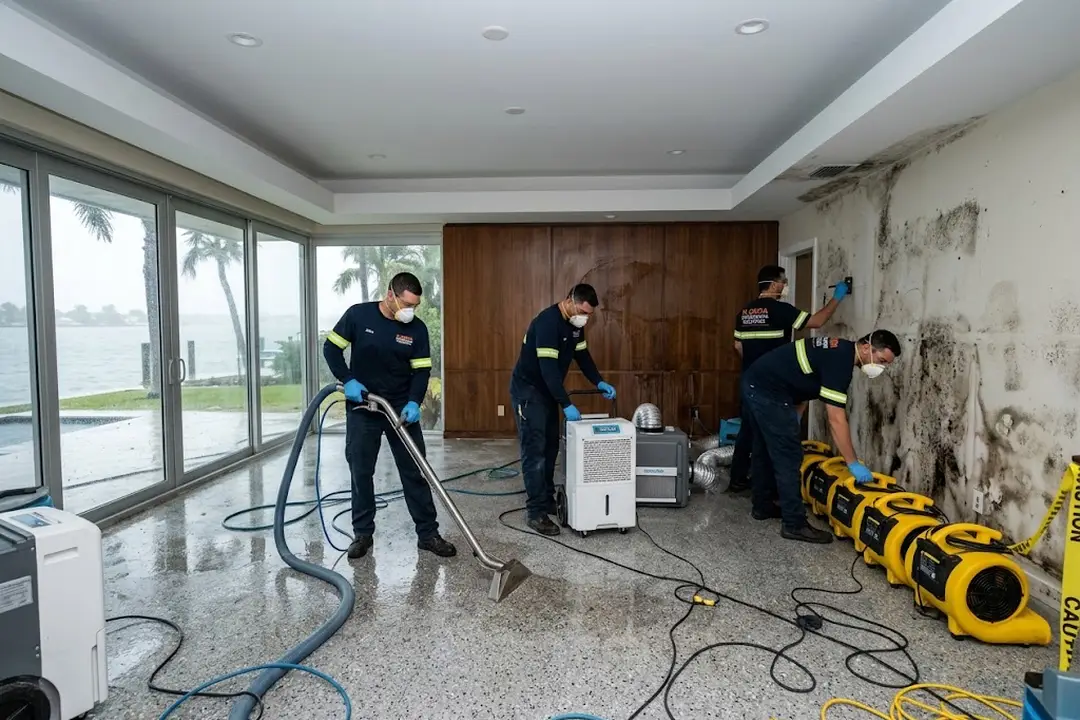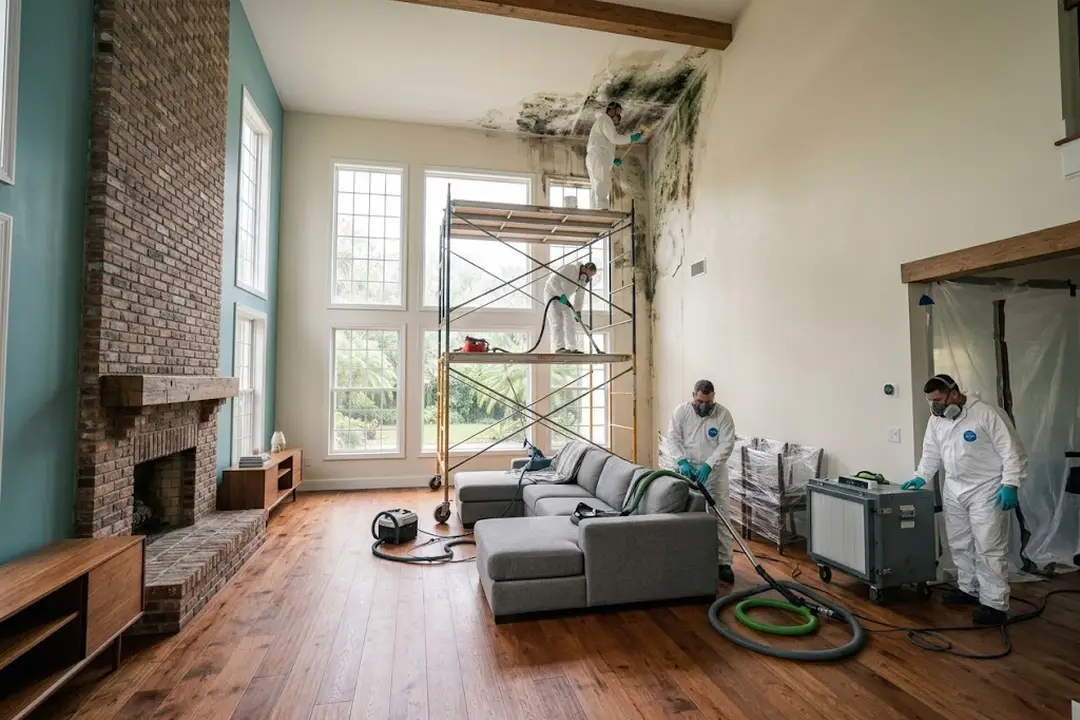
Attic Mold Removal in West Palm Beach, FL

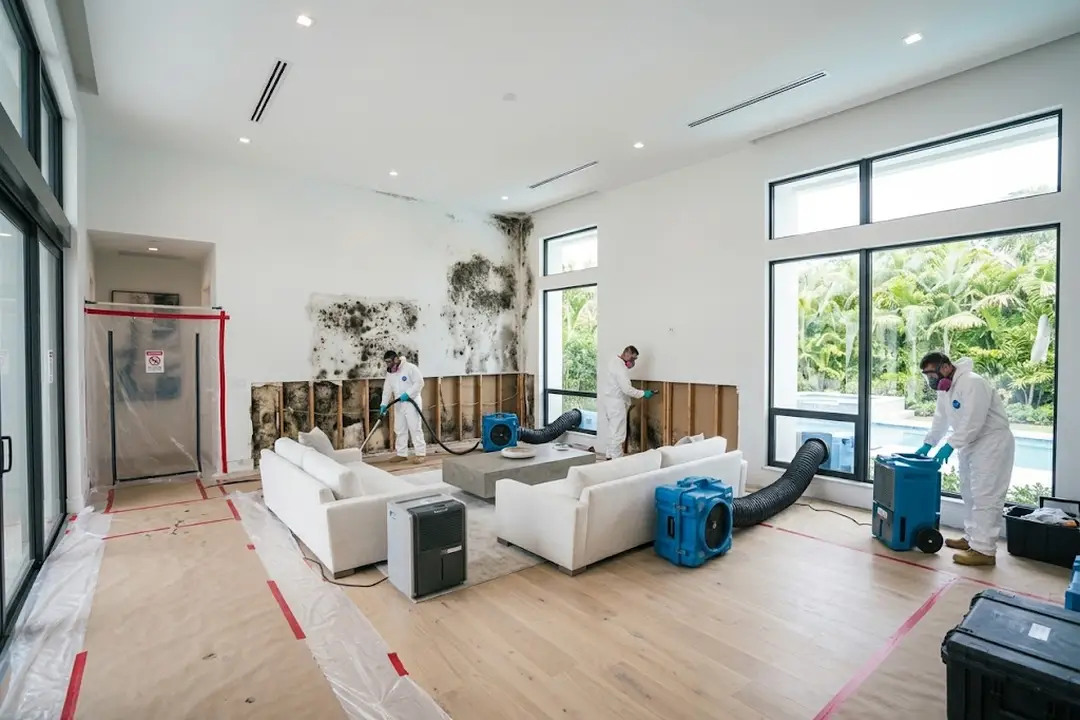
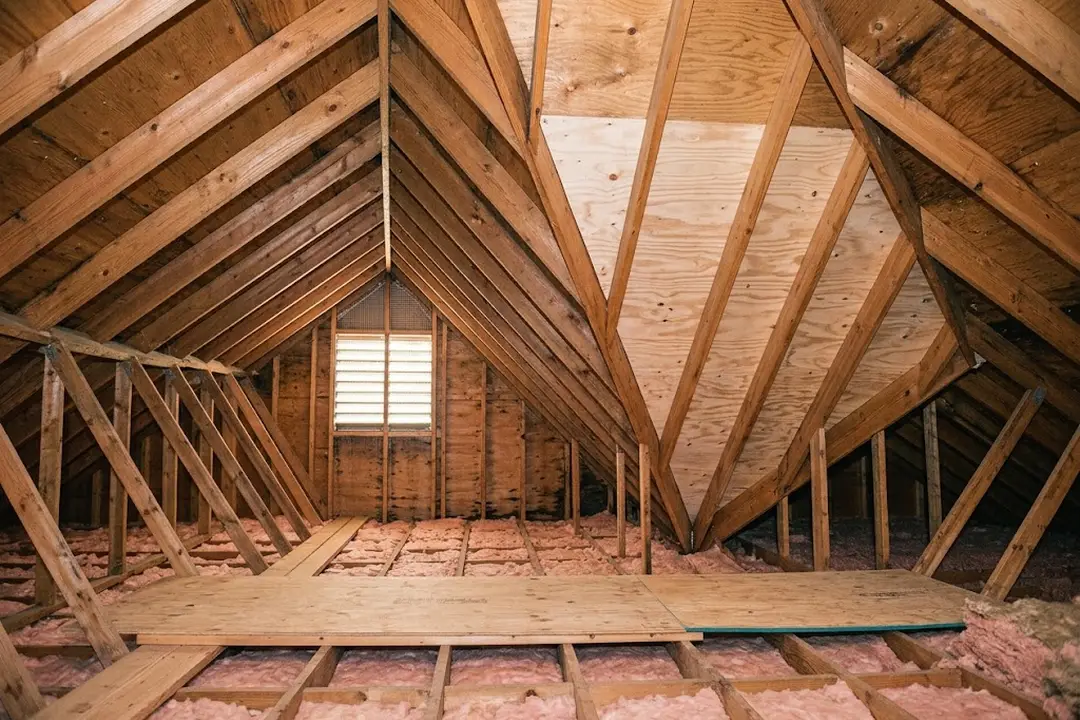
Most homeowners discover attic mold months after it started. By the time it’s visible from below or caught during a home inspection, it’s already spread across the roof decking, sheathing, and often into the insulation.

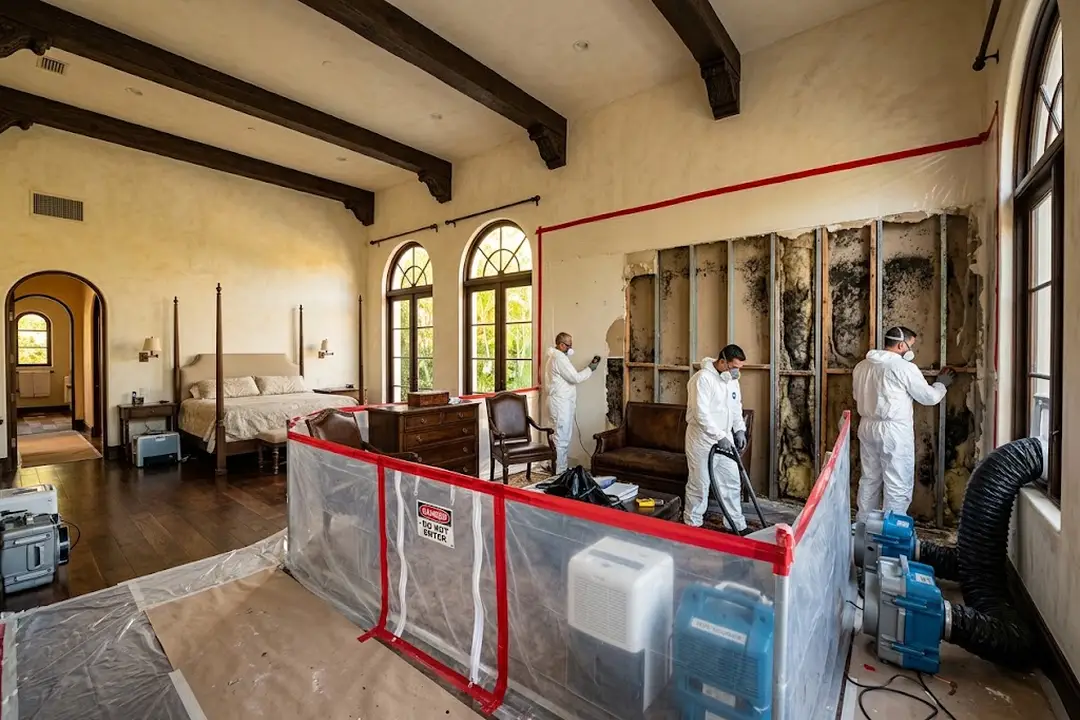
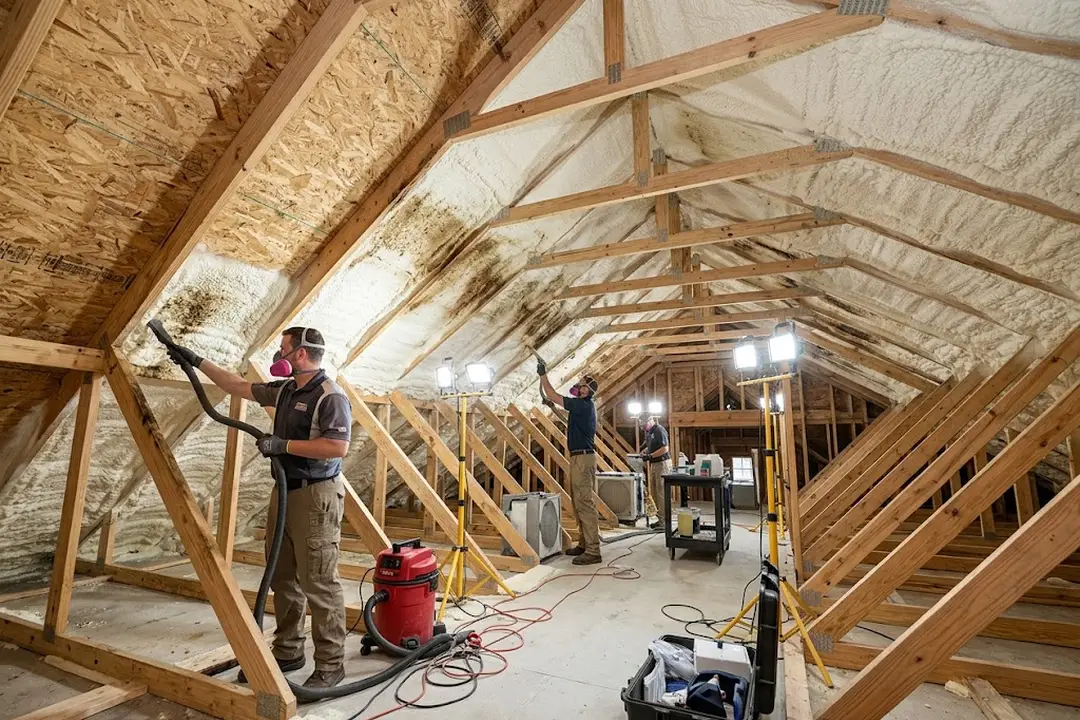
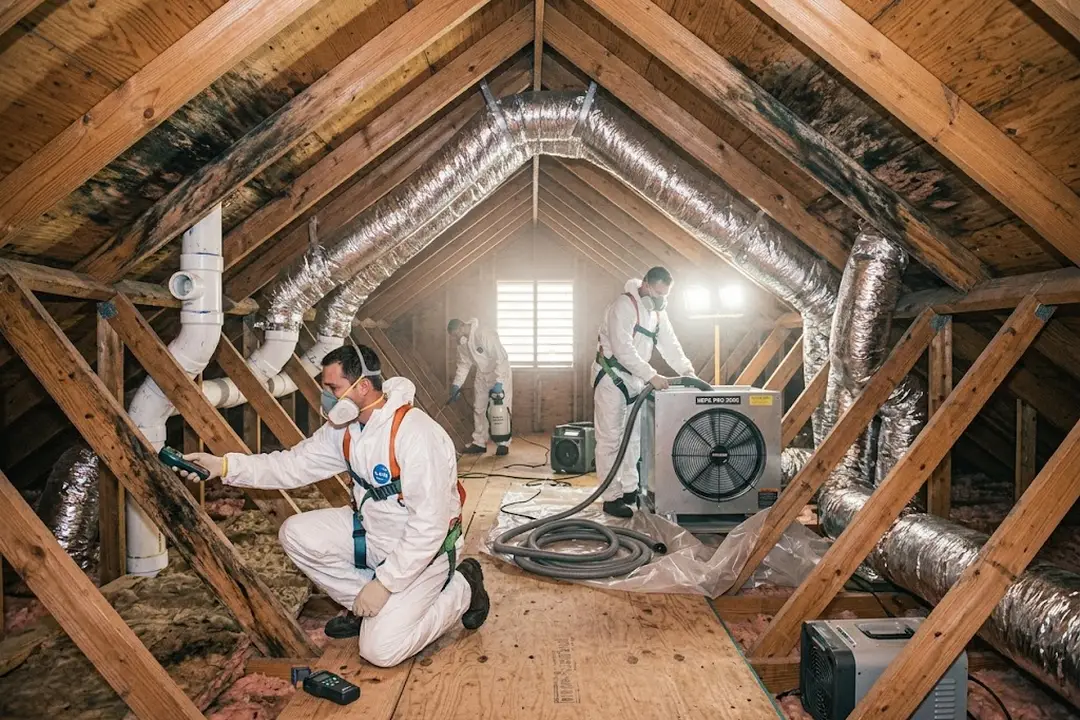
Palm Beach Mold Pros provides attic mold removal services in West Palm Beach following IICRC S520 protocols. We treat OSB, plywood, and roof sheathing with borate antifungal solutions, remove contaminated insulation, and apply encapsulation coatings to prevent recurrence. We’re state-licensed under Florida DBPR and carry full insurance documentation for every job.

WHAT ATTIC MOLD REMOVAL INCLUDES

What Our Attic Mold Removal Services in West Palm Beach Include

Attic mold removal services in West Palm Beach cover four work scopes depending on the size of the affected area and the materials contaminated. Here is exactly what we do.
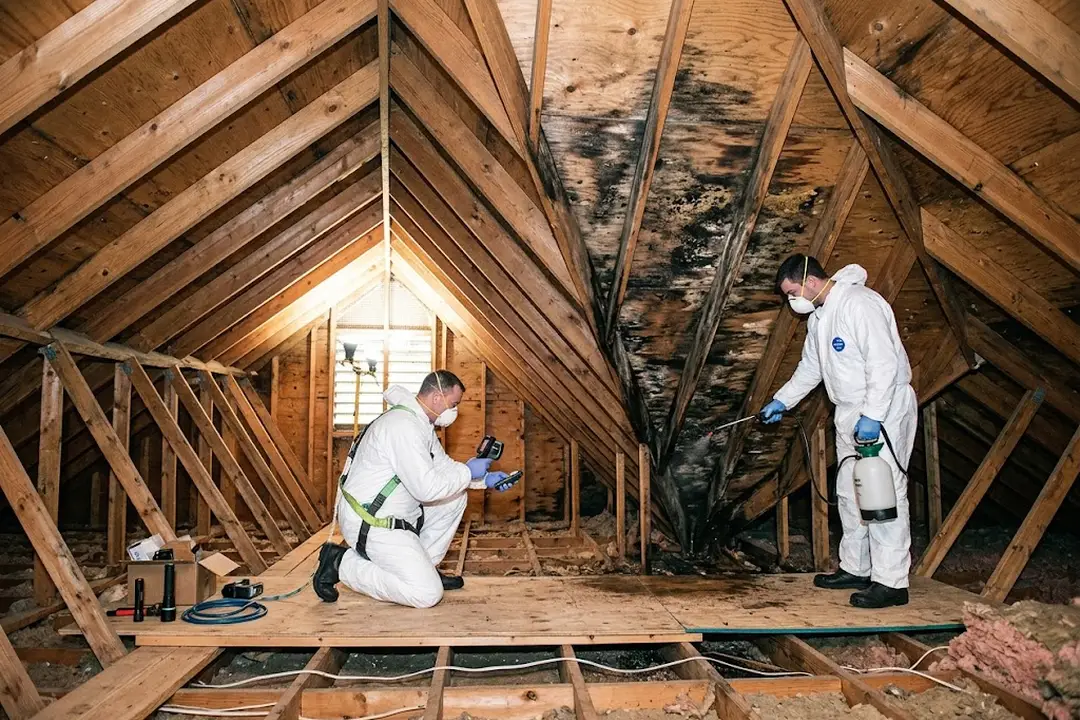
Male technician applying borate antifungal treatment to mold-affected attic roof decking in West Palm Beach.

Antifungal Treatment of Structural Wood

Borate compounds (Tim-bor or Boracare) are applied to all affected roof decking, roof sheathing, OSB, and plywood surfaces. Borate penetrates wood grain and kills active attic mold growth at the source rather than just treating the surface. It remains active in the wood long-term, providing ongoing protection against recurrence.

Male remediation technician applying encapsulation coating to treated attic roof sheathing in West Palm Beach.

Encapsulation

After treatment, an encapsulation coating is applied over treated wood surfaces. Encapsulation seals residual staining, locks the borate treatment in place, and creates a barrier that prevents future moisture absorption into the wood surface. It also satisfies Florida Building Code requirements for treated attic structural wood in a remediated space.

Male remediation technician removing contaminated blown-in insulation from a West Palm Beach attic.

Insulation Removal and Replacement

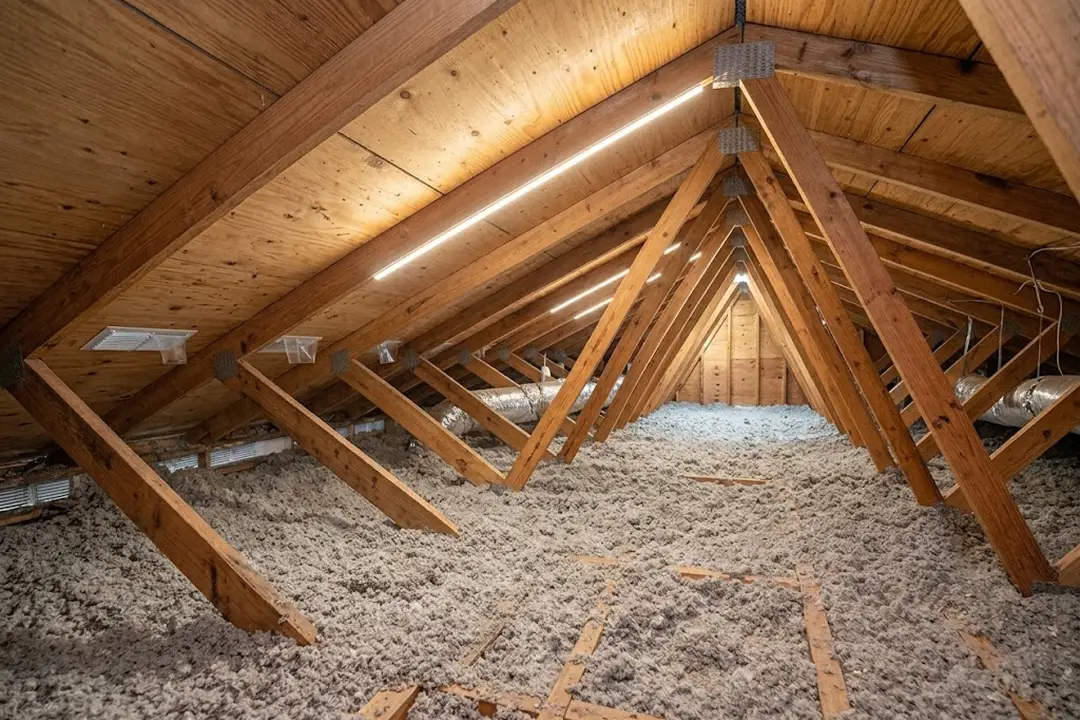
Moldy insulation and damp insulation, whether fiberglass insulation or blown-in insulation, cannot be treated. Contaminated fiberglass insulation or blown-in insulation cannot be treated. It must be removed, bagged, and disposed of as biohazard waste. Replacement insulation is installed only after the structural wood underneath has been treated, dried, and cleared.

Male technician measuring roof decking moisture during structural drying in a West Palm Beach attic.

Structural Drying

Active attic moisture must be eliminated before treatment. We deploy industrial dehumidifiers and structural drying equipment until moisture readings in the attic wood return to safe levels per IICRC S520 standards. Dehumidification continues until attic moisture levels are confirmed safe before any chemical treatment begins.

SIGNS OF MOLD IN YOUR ATTIC

Signs of Mold in Your Attic in West Palm Beach

Attic mold growth gives you almost no warning. These are the signals West Palm Beach homeowners and home inspectors report before a confirmed find.
01

Musty attic smell in the upper floor or master bedroom

Mold spores from an infested attic travel downward through HVAC ducts, HVAC return air, and ceiling gaps. A persistent musty smell in rooms directly below the attic is one of the earliest indicators.
02

Black or gray staining on attic wood surfaces

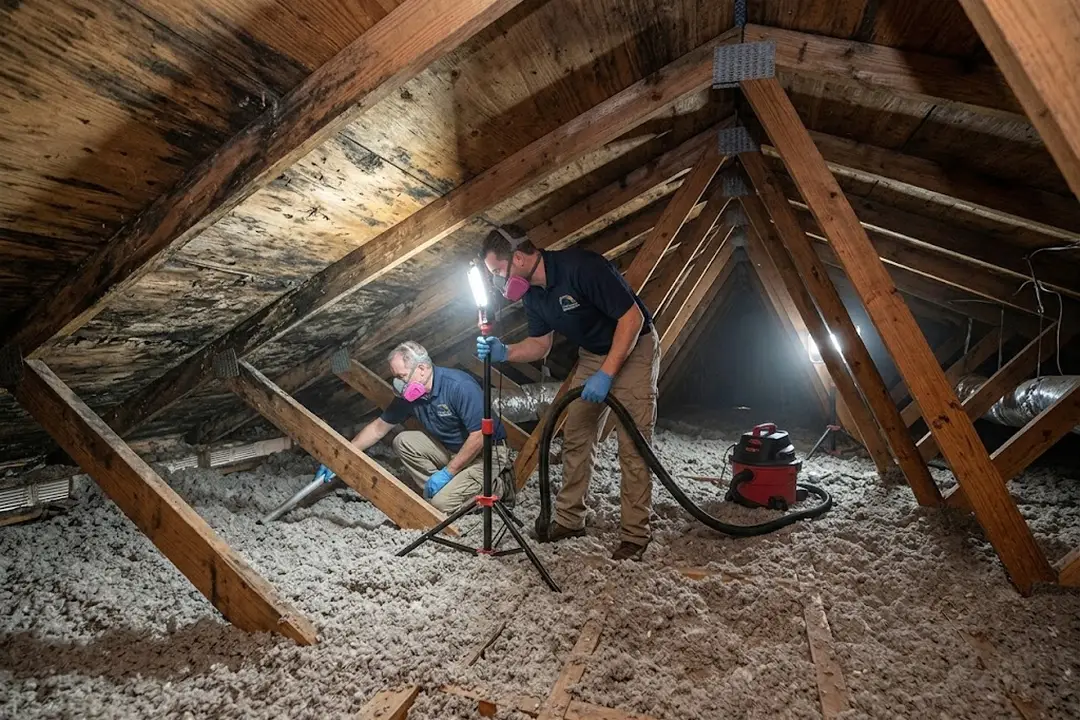
Cladosporium and Stachybotrys chartarum both appear as dark staining on roof sheathing, OSB, and the undersides of roof decking boards. This is distinct from the natural dark grain of aged wood. Staining that spreads across multiple boards in a radiating pattern is active growth.
03

Elevated humidity readings above your ceiling

Attic humidity above 70% creates the conditions for active attic mold growth even without a visible attic mold or roof leak. In West Palm Beach’s climate, an attic without functioning soffit vents and ridge vents routinely exceeds this level during summer months. Tropical rainfall during South Florida’s summer season compounds the problem when roof transitions and flashing are not sealed correctly.
04

Flagged during home inspection or appraisal

Attic mold is a frequent finding during real estate transactions in Palm Beach County. If a home inspector flagged it, the clock is running. Most purchase contracts require remediation documentation before closing.
05

Your roof was recently repaired or replaced

Post-hurricane or post-storm roof work often leaves wood surfaces exposed to rain and moisture intrusion for days. Mold begins growing within 24 to 48 hours of that exposure.
Male mold inspector measuring moisture in stained roof decking during an attic inspection in West Palm Beach.
ATTIC MOLD INSPECTION

Attic Mold Inspection in West Palm Beach Before Removal Begins

No remediation job starts without a documented inspection. Our attic mold inspection in West Palm Beach maps the full extent of growth before a single board is treated.

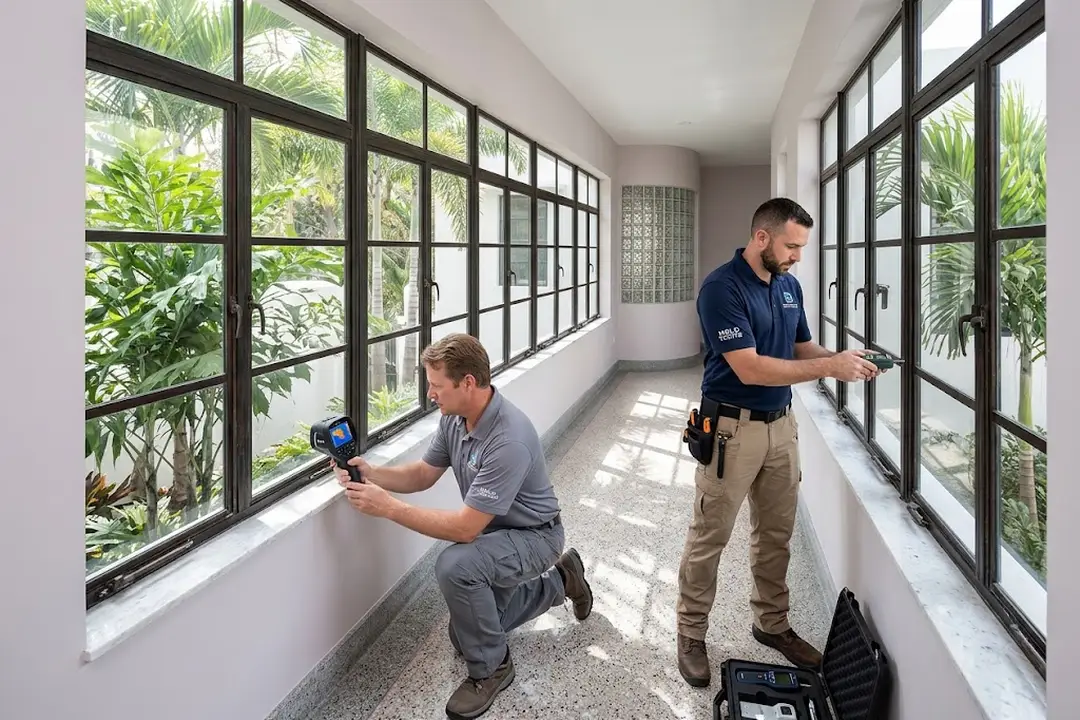
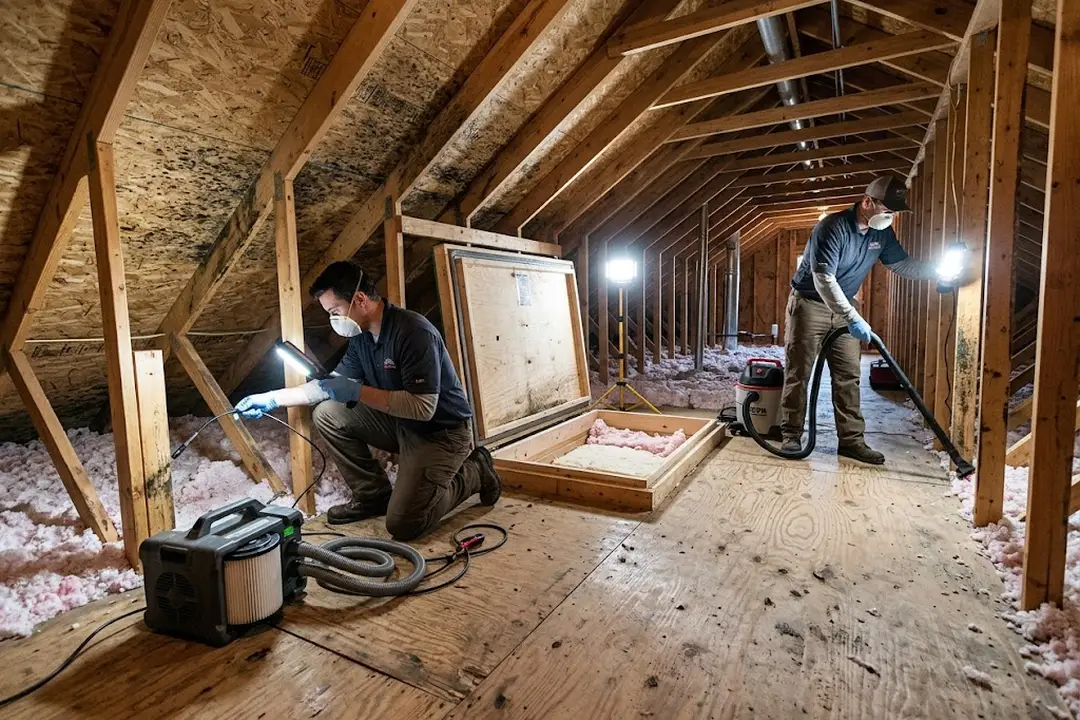
We access the attic with moisture meters, thermal imaging equipment, and borescope cameras where access is limited. We measure wood moisture content at multiple points across the roof decking, roof sheathing, and OSB panels. We identify the moisture source, roof leak, condensation, or inadequate attic ventilation, before quoting a scope of work.

A pre-remediation inspection by a licensed mold inspector is required under Florida law for any job over 10 square feet. The assessor who inspects cannot be the same individual who performs the remediation. Our process is structured to satisfy this requirement with a licensed Florida DBPR Mold Assessor conducting the inspection report independently.

ATTIC MOLD FROM A ROOF LEAK

Attic Mold From a Roof Leak in West Palm Beach

A roof leak in West Palm Beach does not stay at the roof. Water travels along roof decking and roof sheathing boards, soaks into wet insulation and blown-in insulation, and pools at the ceiling drywall below. Mold starts growing on the damp wood within 24 to 48 hours.

The biggest mistake homeowners make after a leak is patching the roof without inspecting the attic below. The damp wood looks dry from above long before it’s actually dried out. Active attic mold growth continues in the attic while the leak repair sits on the invoice as “done.”

Our attic mold from roof leak remediation in West Palm Beach addresses both the moisture intrusion and the biological contamination. We trace the leak path through the attic, measure moisture content in every affected material, deploy structural drying equipment until the wood reaches safe levels, and then begin borate treatment and encapsulation.

If the leak also caused water damage to ceilings, walls, or living areas below, our water damage mold removal team handles that scope in the same project.

WHAT WE TREAT: ROOF DECKING, SHEATHING, OSB, AND INSULATION

Mold on Roof Decking and Attic Sheathing in West Palm Beach

Attic mold growth almost always grows on the structural wood, not just the surface. Understanding which materials are affected determines the scope and cost of remediation.
01

Roof Decking and Sheathing

Roof decking and roof sheathing are the wood boards nailed directly to the rafters and roof trusses that the roofing material sits on top of. Mold on this surface is called mold on roof decking in West Palm Beach or mold on attic sheathing in West Palm Beach depending on how the material was installed. Both are treated with borate application followed by encapsulation. Replacement is required only if structural integrity is compromised, which our inspection documents before any work is authorized.
02

OSB and Plywood

OSB (Oriented Strand Board) and plywood roof panels are common in West Palm Beach homes built after 1990. These engineered wood products absorb moisture faster than solid wood and can delaminate under sustained attic mold growth. Borate penetration depth is measured and recorded as part of the treatment documentation.
03

Mold in Attic Insulation

Mold in attic insulation removal in West Palm Beach is handled separately from the structural wood treatment. Moldy insulation, damp insulation, contaminated fiberglass insulation, and blown-in insulation cannot be dried, treated, or salvaged. It is removed by hand, double-bagged, and disposed of as biohazard material. New insulation is installed only after wood surfaces have been treated, dried, encapsulated, and cleared.

MOLD ON ROOF DECKING TREATMENT

Mold on Roof Decking Treatment in West Palm Beach

Mold on roof decking treatment in West Palm Beach follows a specific sequence that complies with IICRC S520 and Florida Building Code requirements. Skipping steps or using surface-only treatments does not eliminate the fungal colony embedded in the wood grain.
01
Step 1: HEPA vacuum all loose spores and debris from the affected surface before any product is applied.
02
Step 2: Apply Tim-bor or Boracare — two borate formulations with different penetration profiles. Tim-bor is the standard antimicrobial treatment application for active growth. Boracare is used for heavy infestations or where deeper wood penetration is required. Both are EPA-registered fungicides safe for indoor wood application.
03
Step 3: Allow full drying and penetration time before measuring borate retention levels in the wood.
04
Step 4: Apply encapsulation coating over the treated surface to seal the treated wood, lock in the borate compound, and satisfy inspection requirements for remediated structural wood.
05
Step 5: Document with photos and written report formatted for insurance submission, real estate disclosure, or general contractor review.

Booking for a real estate transaction? Provide the listing address and closing date when you call so we can schedule the lab turnaround to meet your deadline. You can also request a mold inspection online if you prefer.

BLACK MOLD IN ATTIC

Black Mold in Your Attic in West Palm Beach

Not all dark staining in an attic is Stachybotrys chartarum. Cladosporium is the most common attic mold species in South Florida and appears very similar in color and texture. The remediation protocol for each species is different.

For confirmed or suspected black mold in your attic in West Palm Beach, we recommend mold testing with PCR DNA analysis before finalizing the removal scope. Species identification determines whether standard borate treatment is sufficient or whether biohazard-grade containment is required.

If Stachybotrys chartarum is confirmed in the attic, we coordinate with our black mold removal team to apply full biohazard protocol, including sealed containment barriers, negative air pressure, HEPA filtration, and HEPA air scrubbing throughout the work area. The attic is fully isolated from the living space below before any disturbing of contaminated material begins.

Male mold assessor collecting a sample from suspected dark mold on attic roof decking in West Palm Beach.
OUR ATTIC MOLD REMEDIATION PROCESS

Our Attic Mold Remediation Process in West Palm Beach

Our attic mold remediation in West Palm Beach follows a documented six-step sequence from first inspection to final clearance. As a licensed mold remediation company following IICRC S520 (2024 edition) standards, every step is recorded and provided in writing.
1

Licensed Assessment

A Florida DBPR licensed Mold Assessor conducts the pre-remediation inspection and issues a written scope of work.
2

Containment Setup

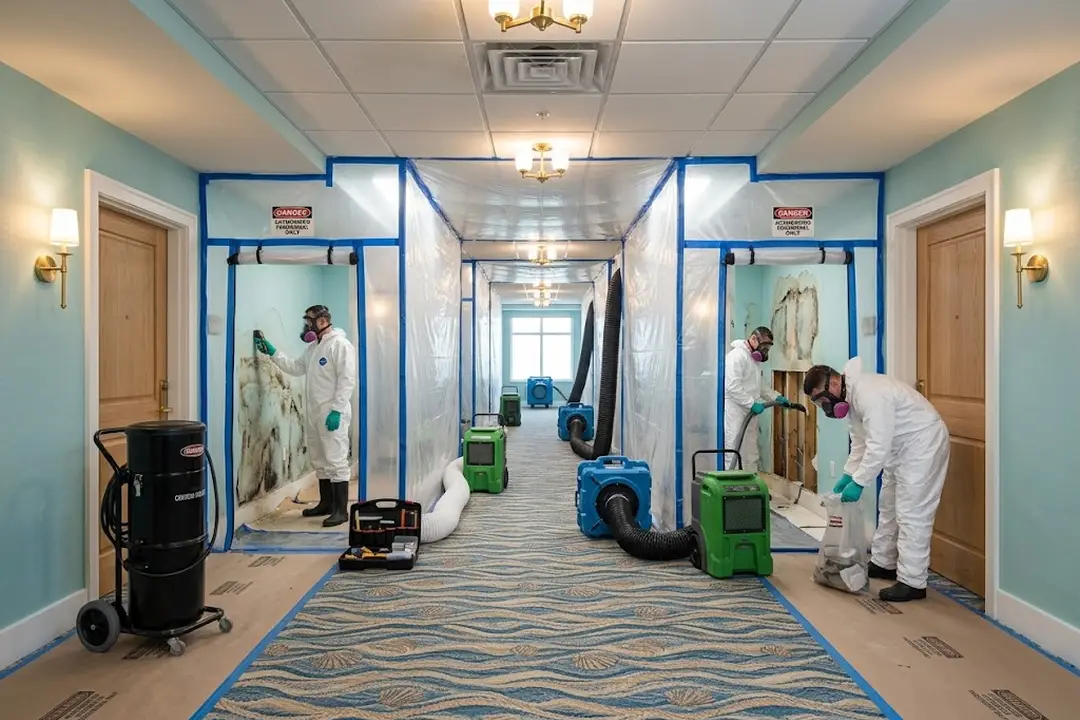
The attic access point is sealed with poly barriers. Negative air pressure is established using HEPA air scrubbers and HEPA filtration to prevent cross-contamination into living areas below.
3

Insulation Removal

Contaminated fiberglass or blown-in insulation is removed by hand, double-bagged, and transported for biohazard disposal.
4

HEPA Vacuuming

Loose spores and debris are removed from all structural wood surfaces using commercial-grade HEPA vacuums before any chemical treatment is applied.
5

Borate Treatment and Encapsulation

Tim-bor or Boracare is applied to all affected roof decking, roof sheathing, OSB, and structural framing. This antimicrobial treatment protocol eliminates fungal colonies embedded in the wood grain. Encapsulation coating is applied after full drying and penetration.
6

Post-Remediation Clearance

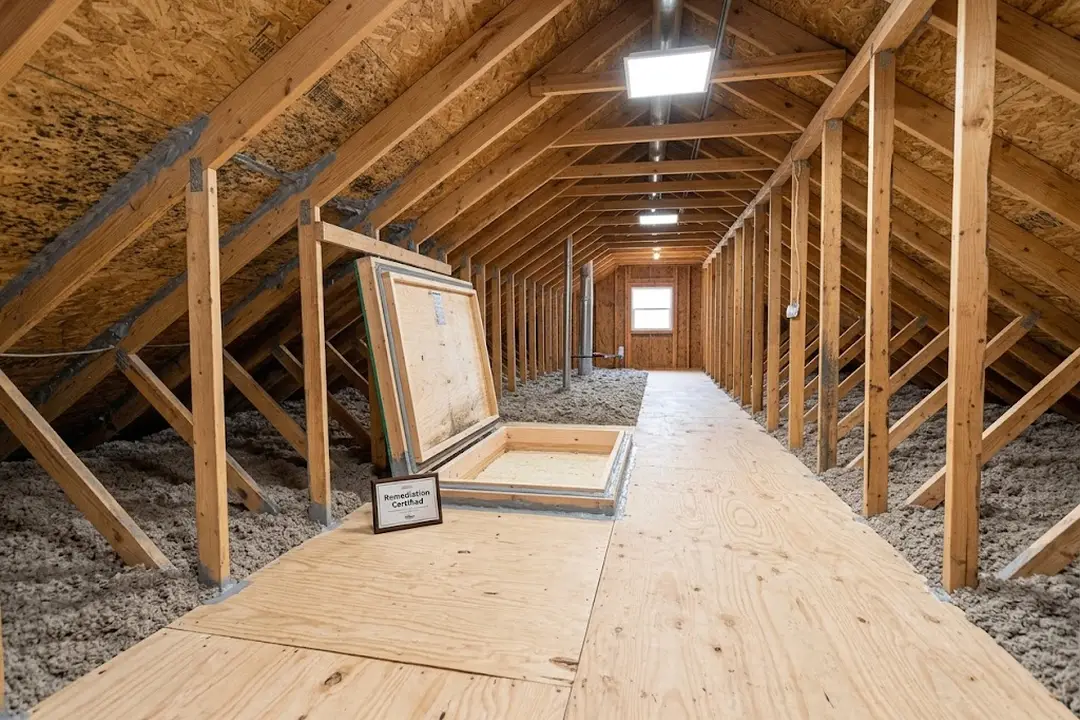
A licensed Mold Assessor conducts the post-remediation inspection independently. Clearance testing report is issued and formatted for insurance, legal, and real estate use.
ATTIC VENTILATION AND MOLD PREVENTION

Attic Ventilation and Mold Prevention in West Palm Beach After Removal

Treating mold without correcting the ventilation problem that caused it means the mold comes back. Attic ventilation mold prevention in West Palm Beach is addressed as part of every remediation project, not as an add-on.
Male technician inspecting soffit ventilation and roof decking moisture after attic mold removal in West Palm Beach.
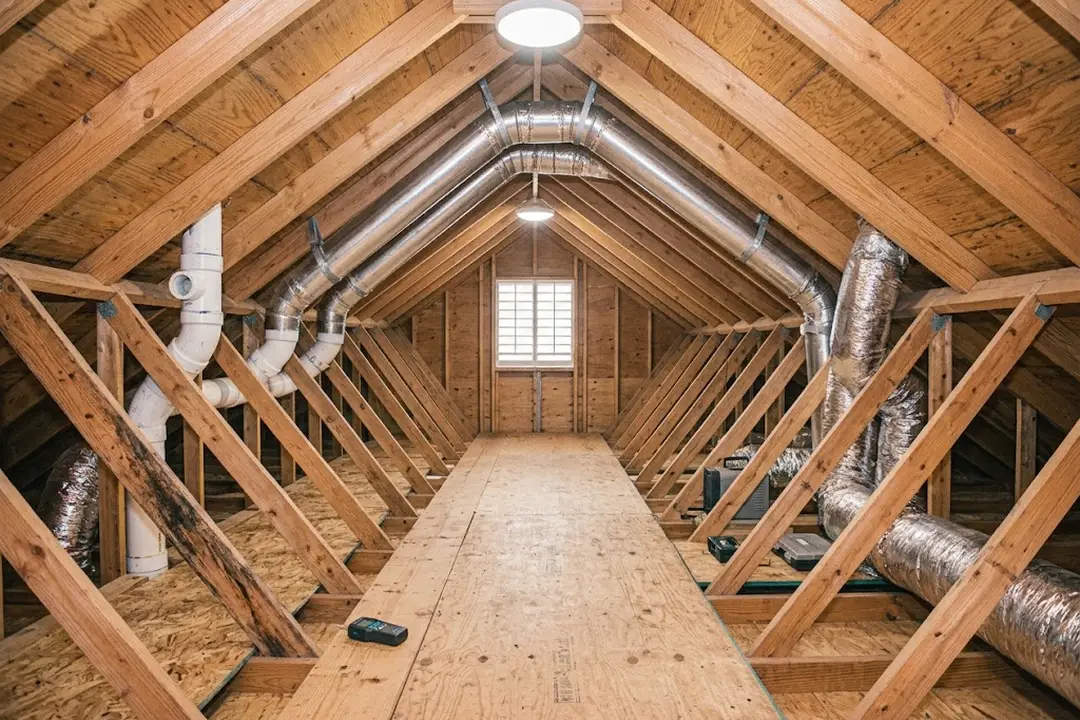
Adequate attic ventilation requires a balanced system: soffit vents bring cooler outside air in at the eave level, and ridge vents exhaust hot, humid air out at the roof peak. Gable vents on side walls provide supplemental airflow but do not replace a properly balanced soffit vent and ridge vent system. When either is blocked by insulation installed too close to the soffit, debris in the ridge vent, or a previous roofing job that didn’t restore vent openings heat and attic moisture accumulate and attic condensation forms on the underside of the roof decking.
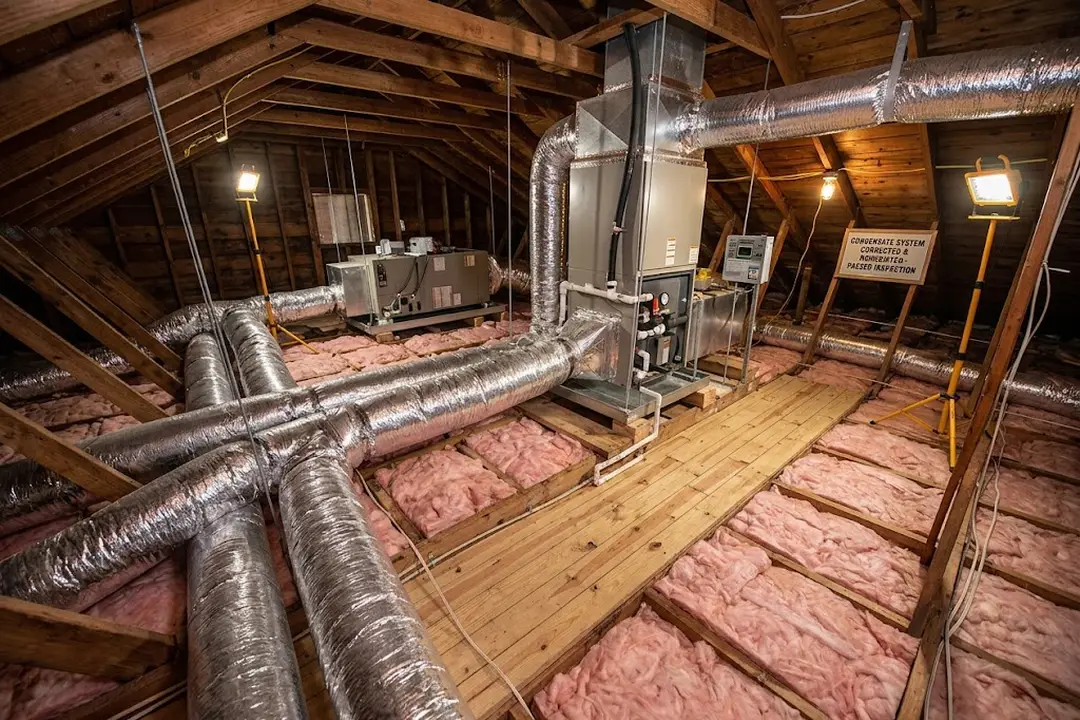
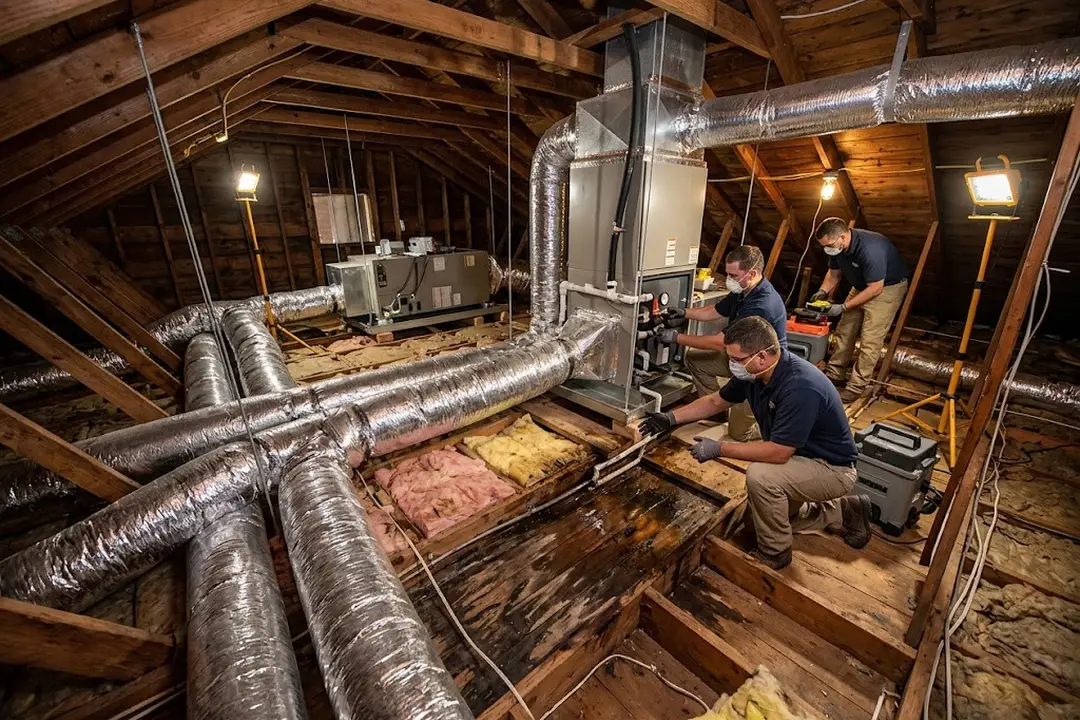
Temperature differences between the heated living space below and the hot attic surface above accelerate attic condensation formation on structural wood surfaces. Bathroom exhaust fans improperly vented into the attic instead of outside are a common moisture intrusion source in West Palm Beach homes. HVAC condensation from attic-mounted air handlers adds a direct moisture load to an already humid attic space. Both bathroom exhaust leakage and HVAC condensation must be identified and corrected as part of every remediation project.
In West Palm Beach, where Florida humidity averages near 74% year-round and Florida heat creates rapid temperature differences across the roof surface, HVAC systems pull air from the attic through the return system, making a poorly ventilated attic a mold factory.
We document ventilation conditions as part of our inspection report and coordinate with licensed roofing contractors when soffit vent or ridge vent correction is required. Attic mold growth without ventilation correction is a temporary fix.
COST

Attic Mold Removal Cost in West Palm Beach

–

Homeowners insurance covers attic mold remediation when the mold resulted from a covered event such as a roof leak after a storm, hurricane damage, or a sudden plumbing failure. We provide documentation in the format your insurance adjuster requires.

How much does attic mold removal cost in West Palm Beach? The only accurate answer comes after an on-site assessment. We provide a written, itemized quote before any work begins with no pressure and no obligation.

Attic mold removal cost in West Palm Beach varies based on the size of the affected area, the materials involved, and whether insulation replacement is required.

Attic mold remediation cost by scope:

Borate treatment only (small affected area, no insulation involvement): $500 to $1,500

Borate treatment plus encapsulation (moderate growth on roof decking and roof sheathing): $1,500 to $3,500

Full remediation including insulation removal and replacement: $3,500 to $7,000

Large attic with full IICRC S520 biohazard protocol (Stachybotrys confirmed): $5,000 to $12,000+

SERVICE AREAS

Attic Mold Removal Across West Palm Beach and Palm Beach County

We provide attic mold removal services in West Palm Beach throughout all neighborhoods including El Cid, Flamingo Park, Northwood, Grandview Heights, Downtown WPB, Sunshine Park, Palm Beach Lakes, SoSo, Prospect Park, Ibis Golf and Country Club, and surrounding areas.

West Palm Beach Neighborhoods We Serve:

NORTH:
Northwood
Northwood Hills
Pleasant City
Echo Lake
EAST:
El Cid
Flamingo Park
Sunshine Park
Mango Promenade
South End
CENTRAL:
Downtown WPB
Grandview Heights
Pineapple Park
Providencia Park
SOUTH:
Parker Ridge
Southland Park
Prospect Park
Bel Air
WEST:
Palm Beach Lakes
Roosevelt Estates
Pinewood Park
Westgate
Haverhill
Golden Lakes

Also Serving:

Lake Worth
Riviera Beach
Wellington
Royal Palm Beach
Jupiter
REVIEWS

What West Palm Beach Homeowners Say About Our Attic Mold Removal

FAQ

Attic Mold Questions West Palm Beach Homeowners Ask

How much does attic mold removal cost in West Palm Beach?
Cost depends on the size of the affected area and the scope of work required. Borate treatment alone for a small affected area starts around $500 to $1,500. Full attic mold remediation with insulation removal and replacement runs $3,500 to $7,000 for a typical residential attic. Confirmed Stachybotrys requiring biohazard protocol can reach $12,000 or more on large jobs. We provide a written, itemized quote after an on-site attic mold inspection at no charge.
The most common signs are a persistent musty attic smell on the upper floor, dark staining on roof decking or roof sheathing visible from the attic access, elevated attic moisture readings, and discovery during a home inspection or appraisal. Symptoms in your home like respiratory irritation or allergic reactions that improve when you leave can also point to attic mold growth circulating through your HVAC system.
Yes, when the mold resulted from a covered event. Insurance covers attic mold remediation caused by a storm-related roof leak, hurricane damage, sudden pipe failure above the attic, or other covered water events. It does not cover mold caused by long-term condensation or inadequate attic ventilation that the homeowner failed to maintain. We provide all documentation required for your insurance adjuster.
Yes. Mold on roof decking in West Palm Beach is a structural issue, not just an aesthetic one. Active attic mold growth degrades OSB and plywood panels over time, weakening the structural substrate your roofing material depends on. Left untreated, it spreads to adjacent boards and rafters. Florida Building Code requires documented treatment and clearance testing for remediated structural attic wood before a property can be sold or re-occupied after a remediation event.
Borate is an EPA-registered antimicrobial treatment compound that penetrates wood grain and kills fungal colonies at the source. Tim-bor and Boracare are the two primary formulations we use, selected based on infestation severity and required penetration depth. Unlike surface-only biocides, borate remains active in the wood long-term. After borate application, encapsulation coating is applied to seal the surface and lock the treatment in.
A standard residential attic job with borate treatment and encapsulation but no insulation replacement takes one to two days. Dehumidification and structural drying are completed first before treatment begins, adding to the timeline when attic moisture levels are high. Jobs requiring insulation removal and replacement typically take two to three days. Large attics or confirmed Stachybotrys jobs requiring full biohazard protocol can take three to five days. The timeline is confirmed in your written quote before work starts.
Yes, through attic ventilation correction and moisture control. A balanced system of soffit vents and ridge vents keeps attic humidity below the threshold for attic mold growth. Any future roof leaks should be inspected from the attic side within 48 hours of discovery. Annual attic mold inspection after hurricane season is standard practice in Palm Beach County. We include ventilation assessment and recommendations in every remediation report.

Ready to Clear Your Attic?

Book Attic Mold Removal in West Palm Beach

Attic mold growth does not stop on its own. Every week without treatment is another week of growth on your roof decking, roof sheathing, and insulation.

Palm Beach Mold Pros provides attic mold removal, attic mold cleanup, and professional attic remediation in West Palm Beach, FL from licensed Florida DBPR professionals following IICRC S520 standards. We’re fully insured, background-checked, and work with all major insurance companies. Written clearance testing report included on every job.

Emergency attic mold removal available. Same-day scheduling available. Free on-site estimate.