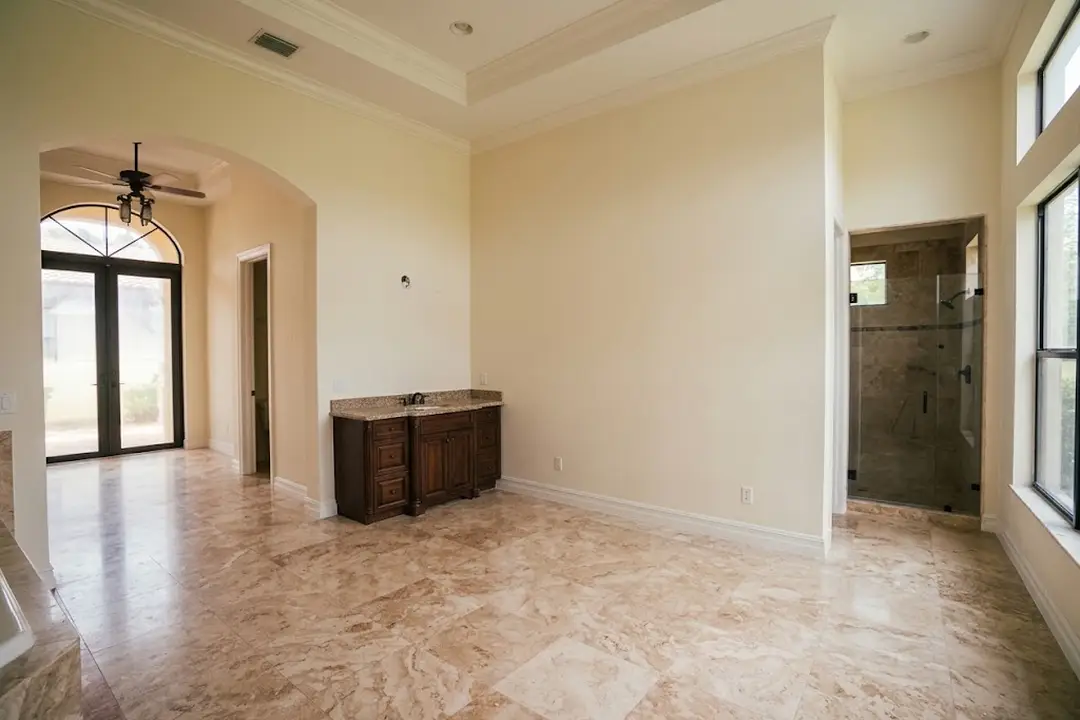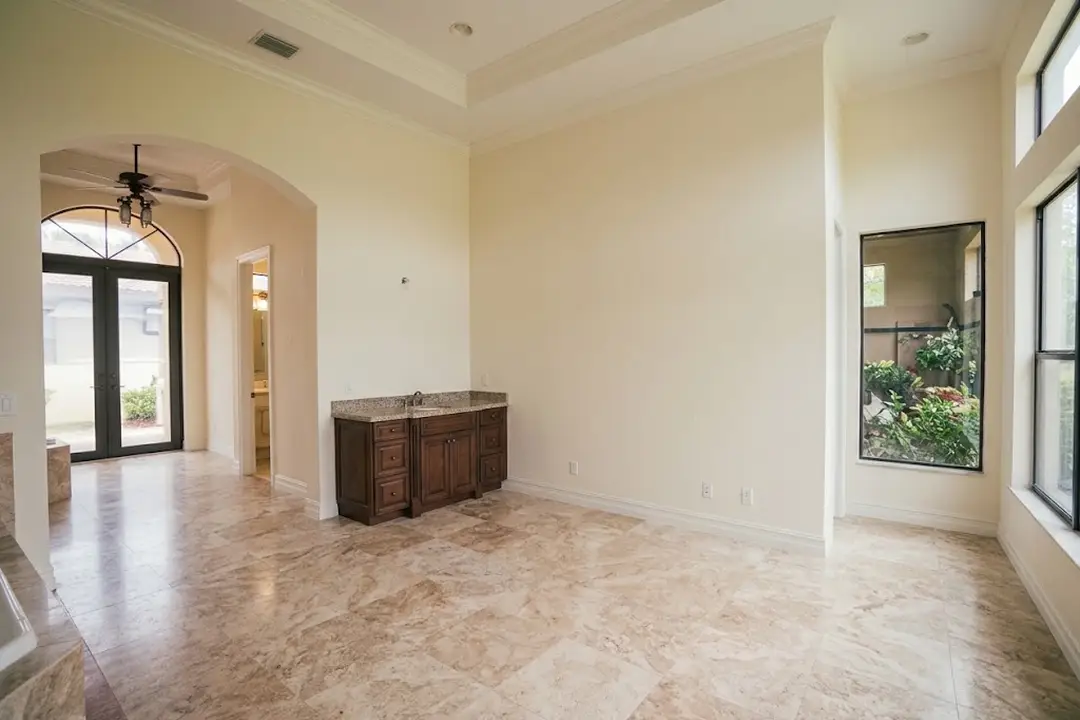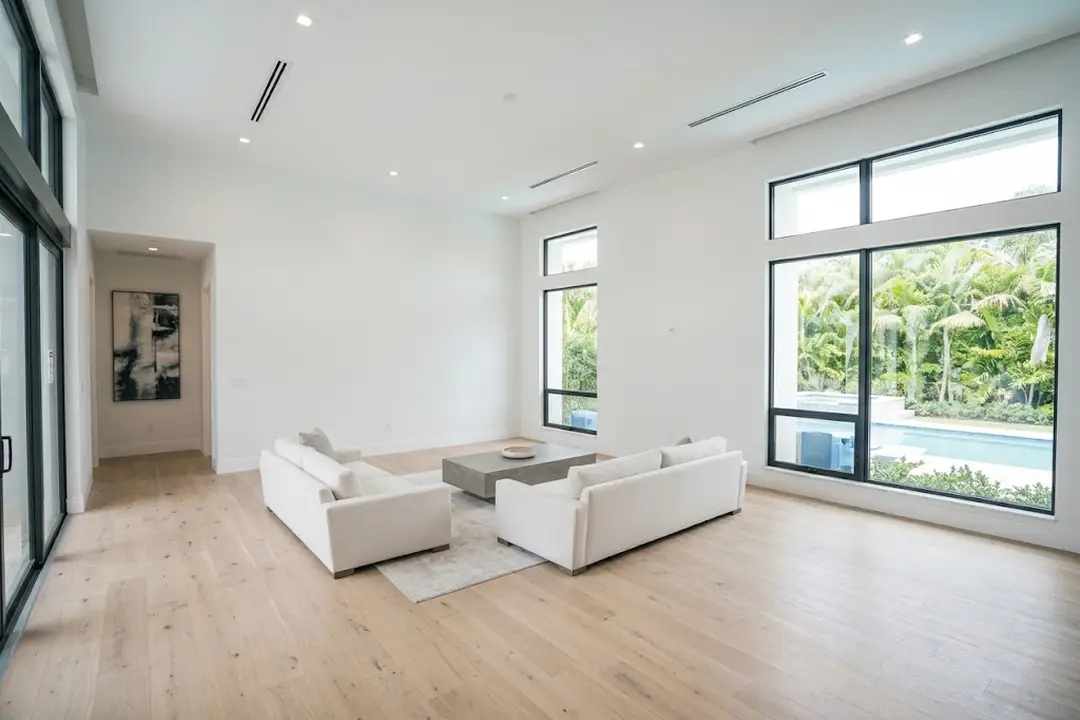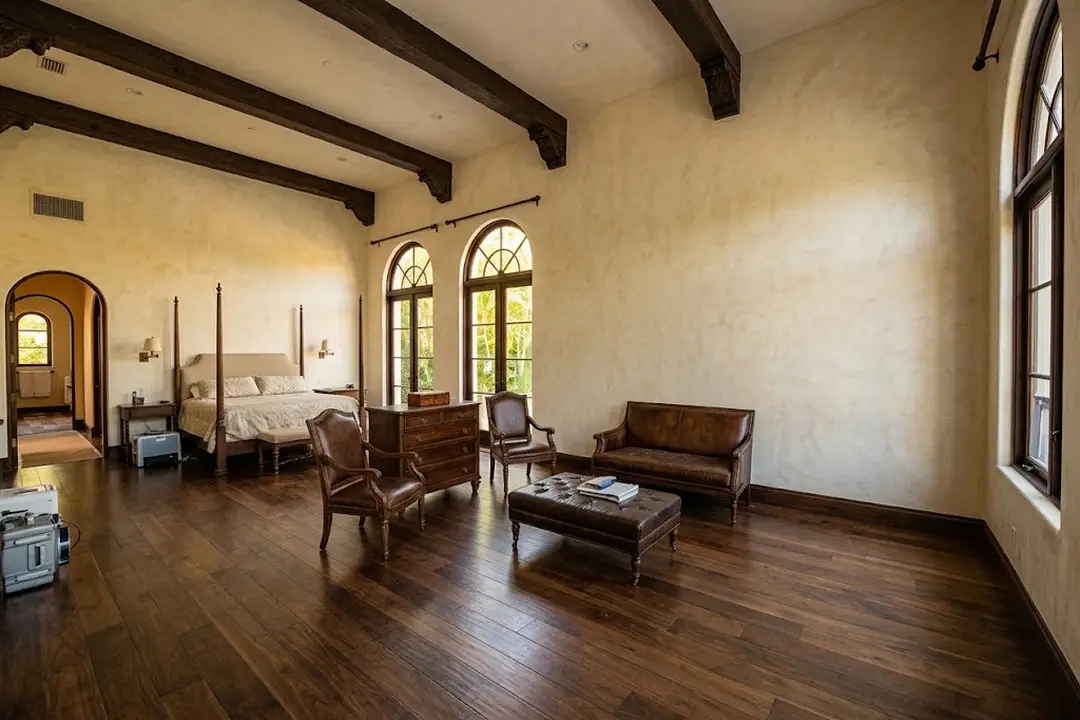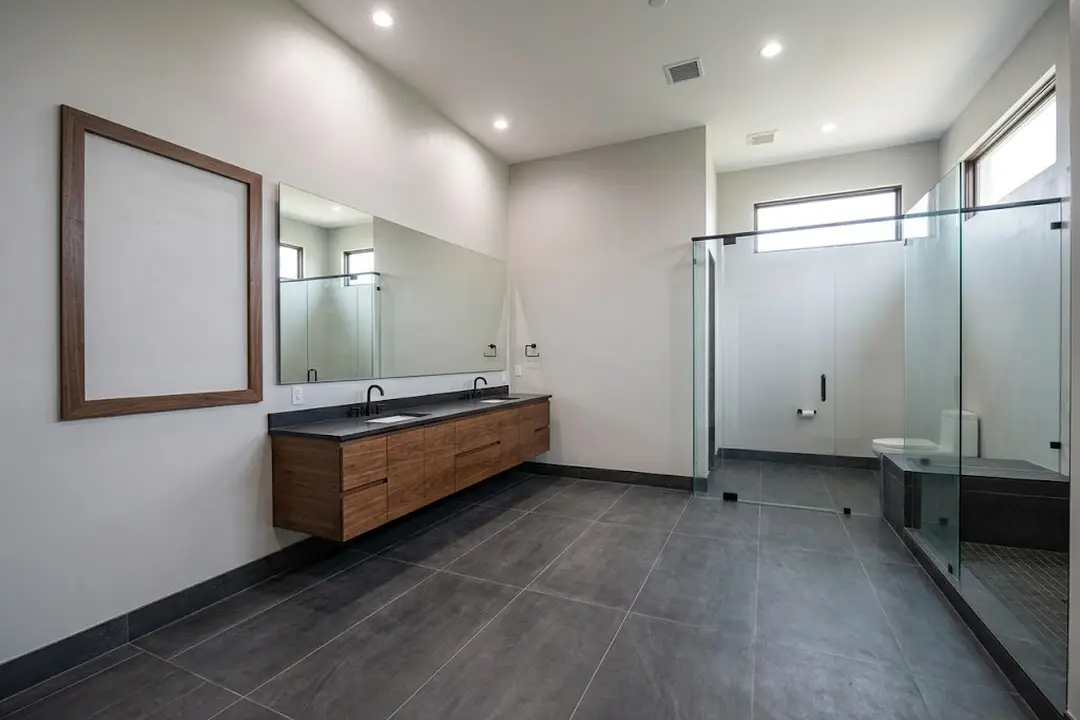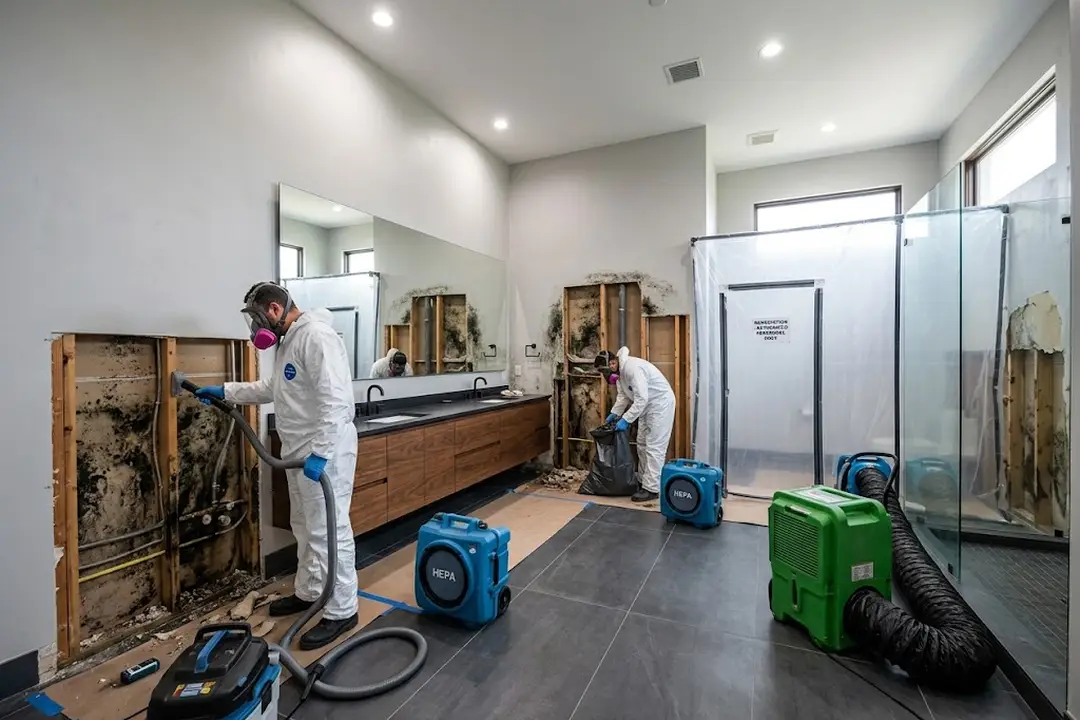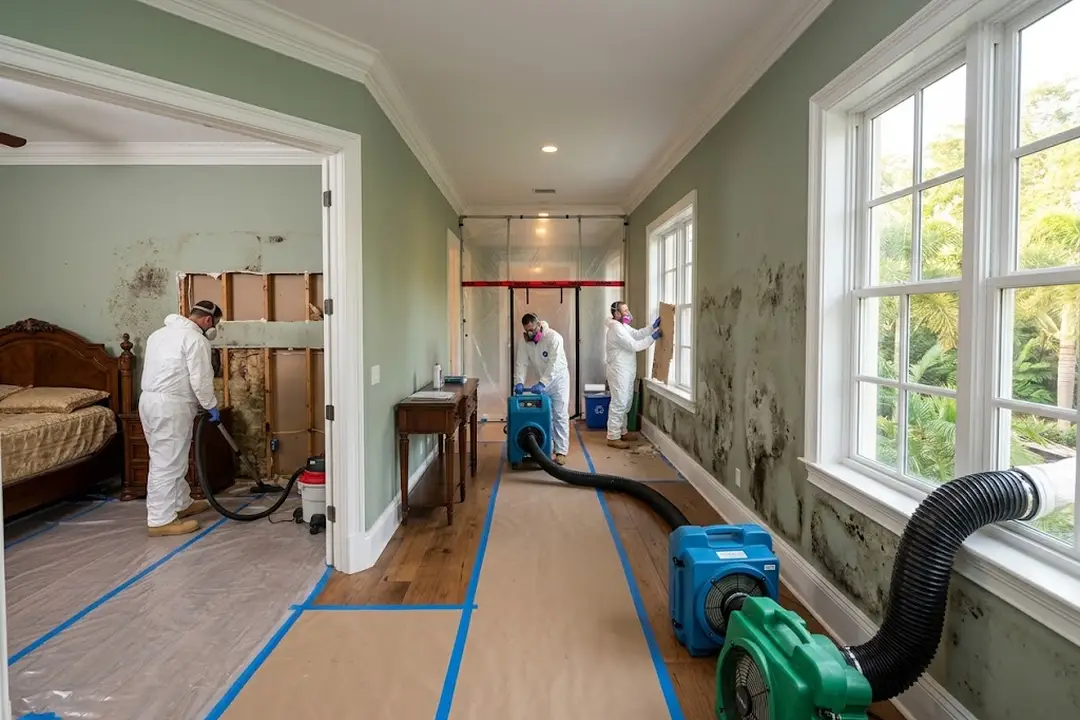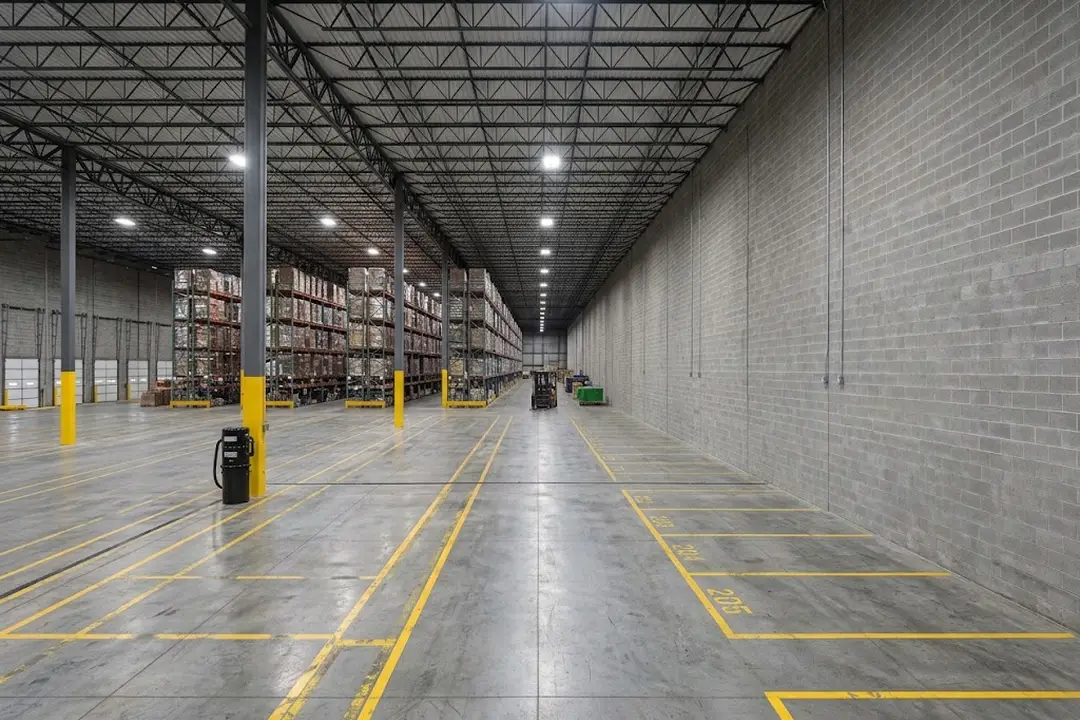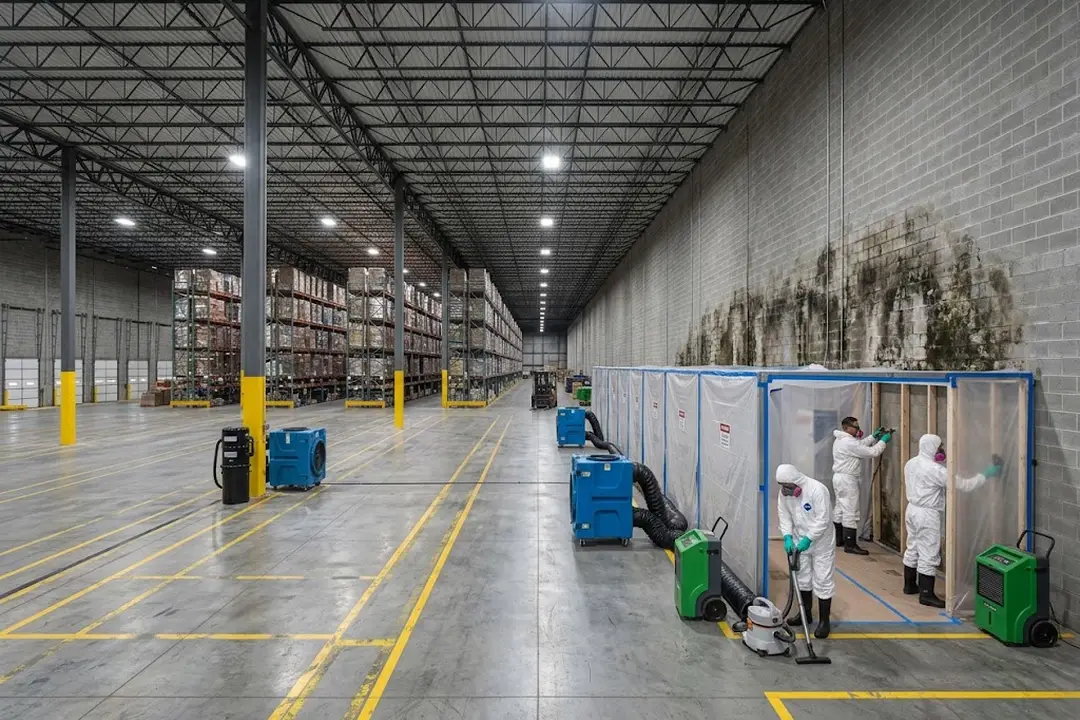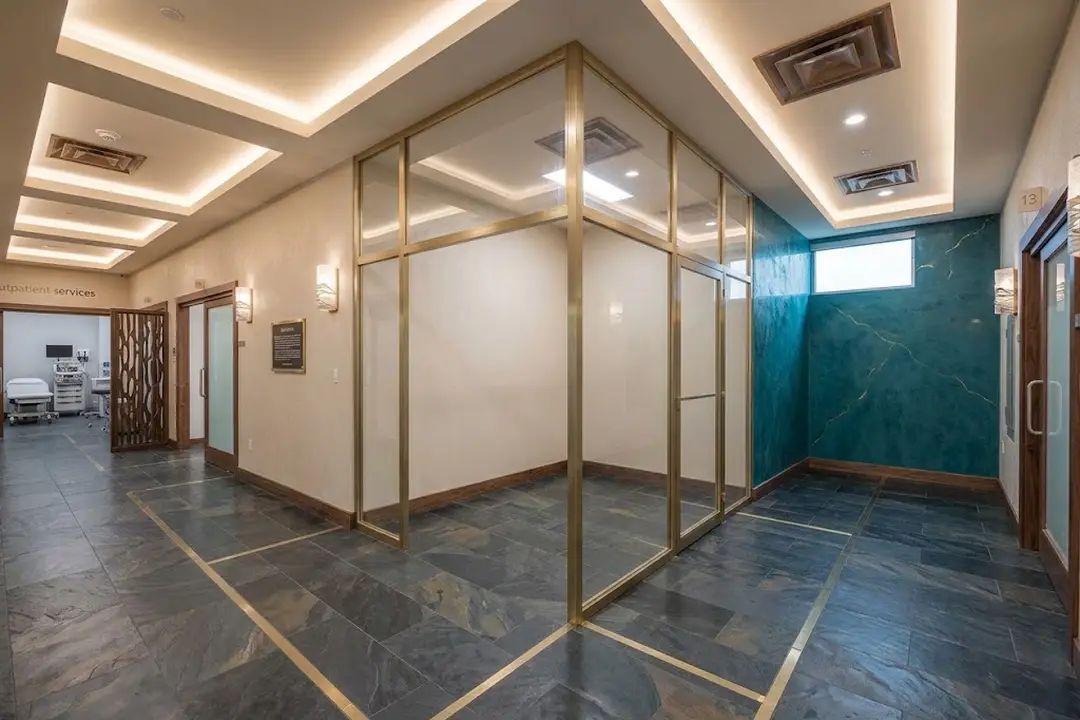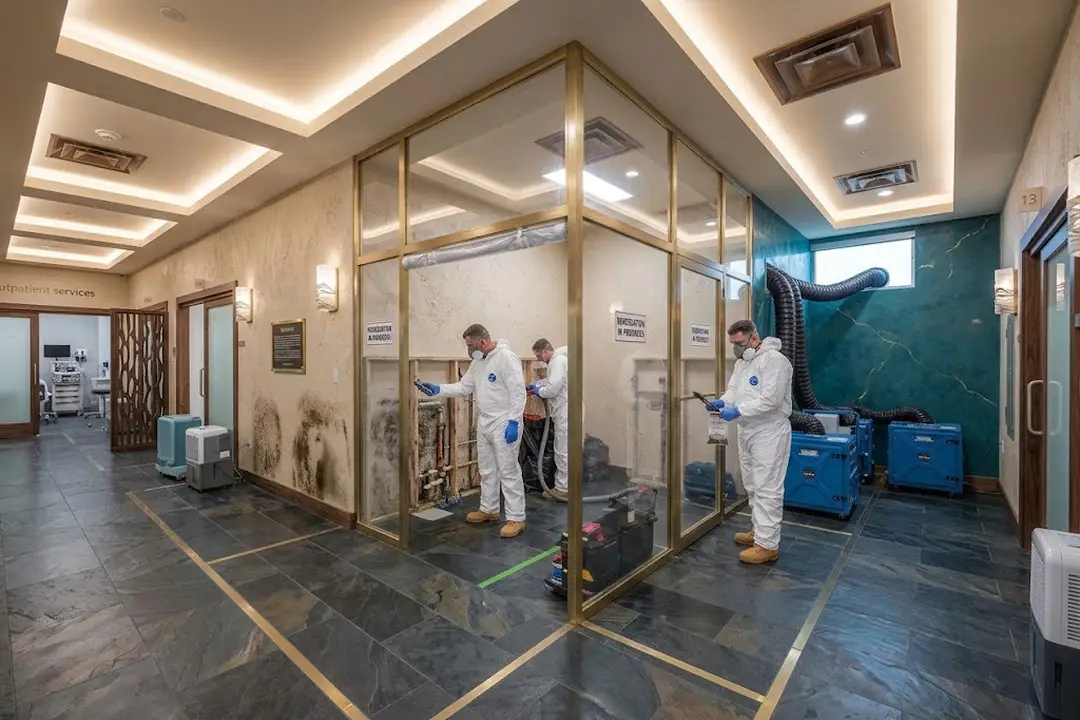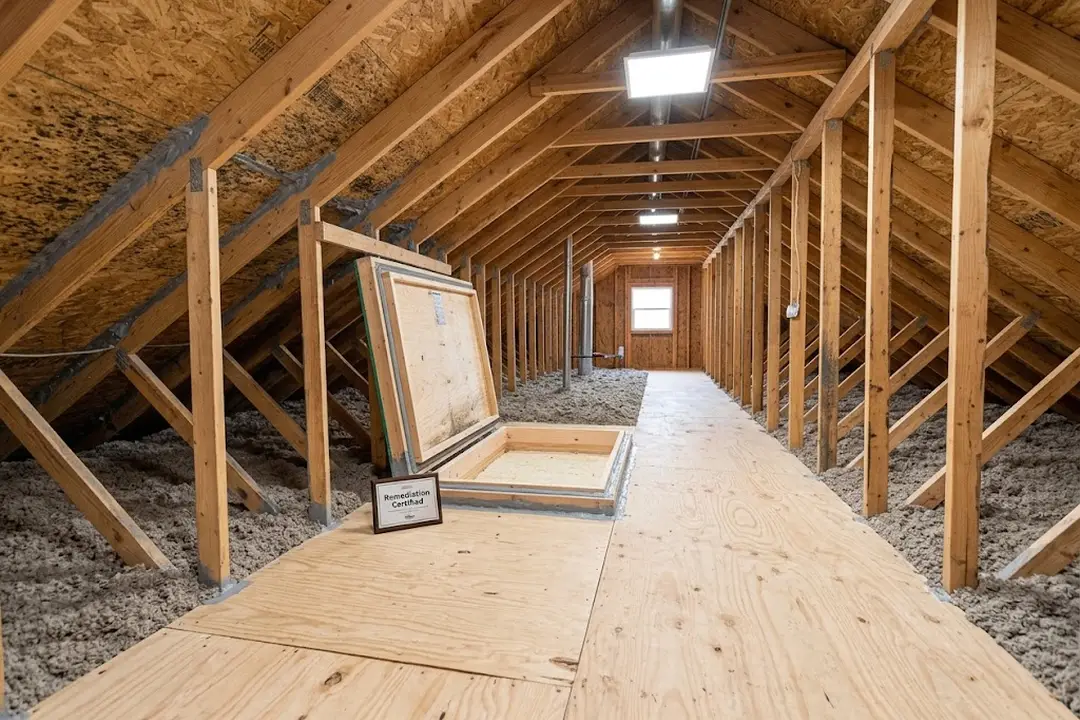
Water Damage Mold Removal in West Palm Beach, FL

Mold begins growing within 24 to 48 hours of a water event. By the time you see it on a wall or smell it in the air, it’s already been spreading behind surfaces for days.

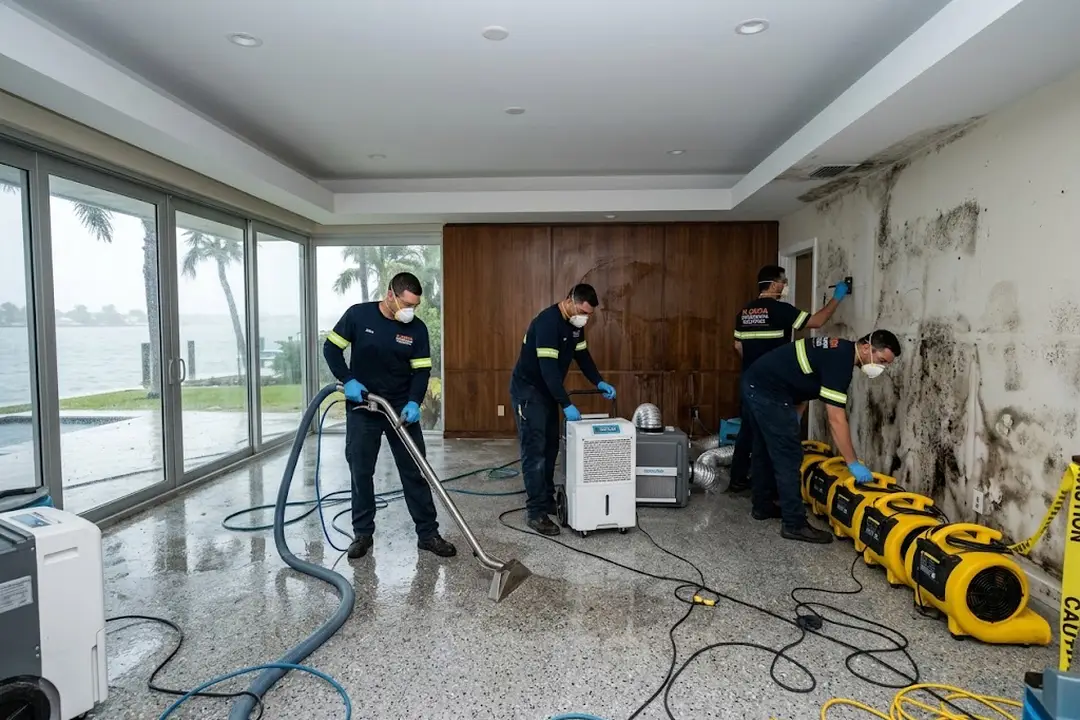
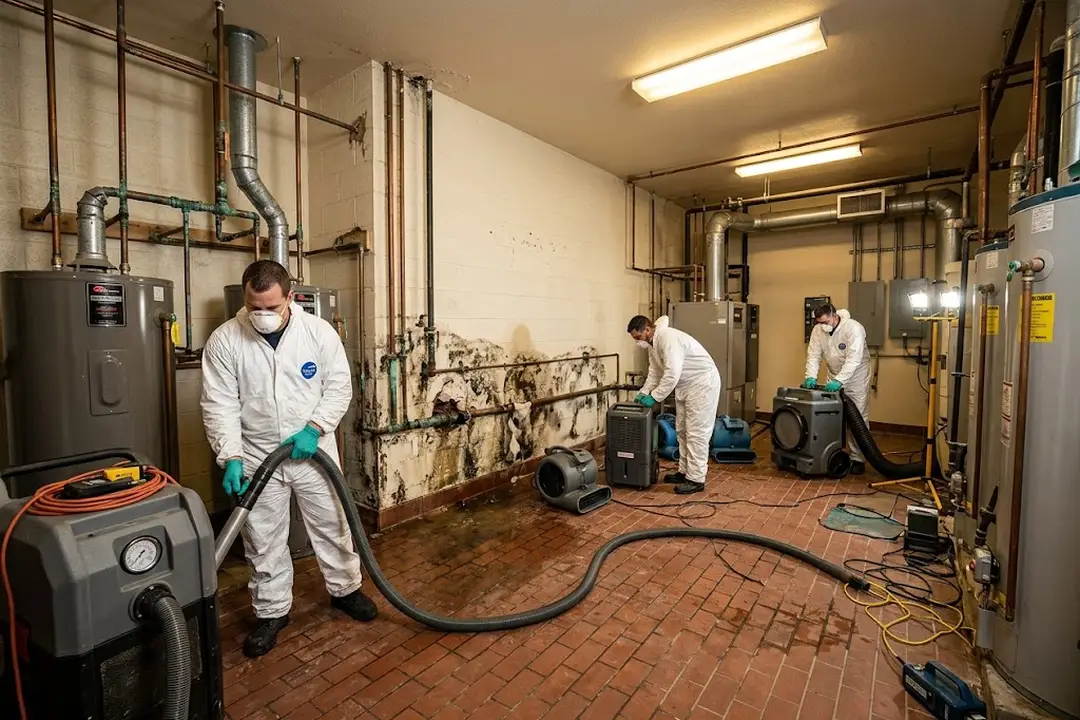
Palm Beach Mold Pros provides water damage mold remediation and water damage restoration in West Palm Beach from water removal and moisture extraction through final clearance. We handle hurricane damage, flooding, pipe bursts, and roof leaks. We’re state-licensed under Florida DBPR, IICRC S500 and S520 certified, and work directly with your flood insurance adjuster.

THE 24-48 HOUR WINDOW

How Fast Does Mold Grow After Water Damage in West Palm Beach?

Mold growth begins within 24 to 48 hours of a water event under the right conditions, and in West Palm Beach those conditions are almost always present. High ambient humidity, warm temperatures year-round, and organic building materials like drywall and wood framing give mold everything it needs to activate immediately after moisture intrusion. In South Florida’s coastal climate, Florida humidity and heavy rainfall during hurricane season mean drying windows are shorter than almost anywhere else in the country.

The 24-48 hour mold growth window is not a rough estimate. It’s the threshold used by IICRC S500 to classify when secondary damage from moisture-related mold becomes likely after a water intrusion. Once mold has established, the scope and cost of remediation increases with every passing day.

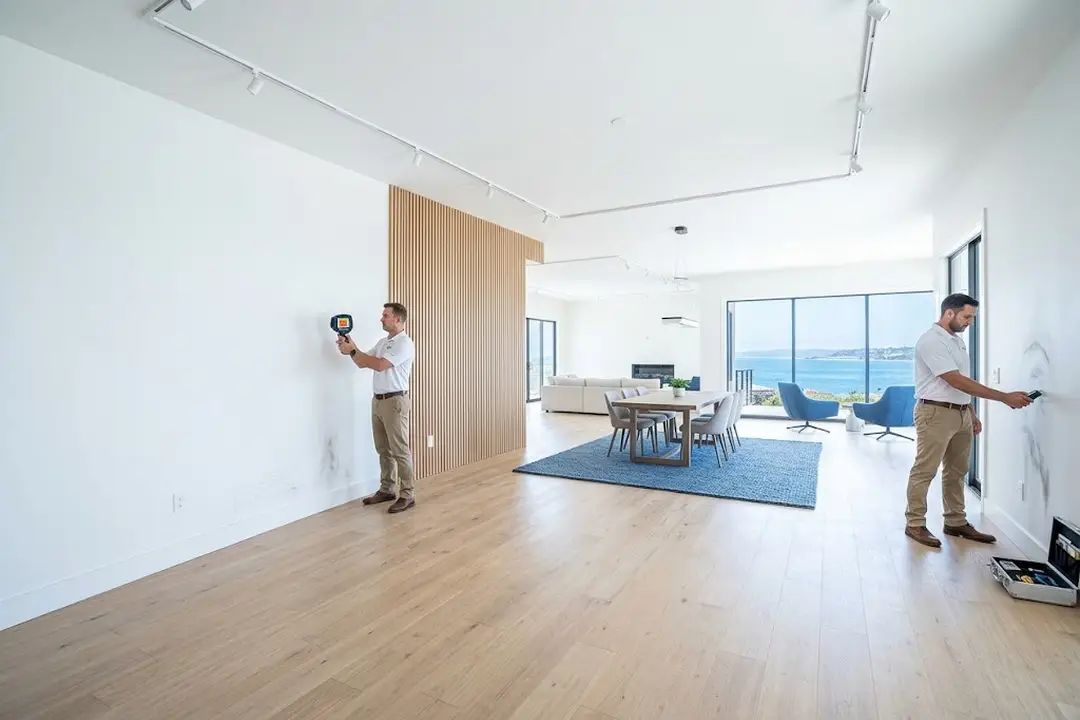
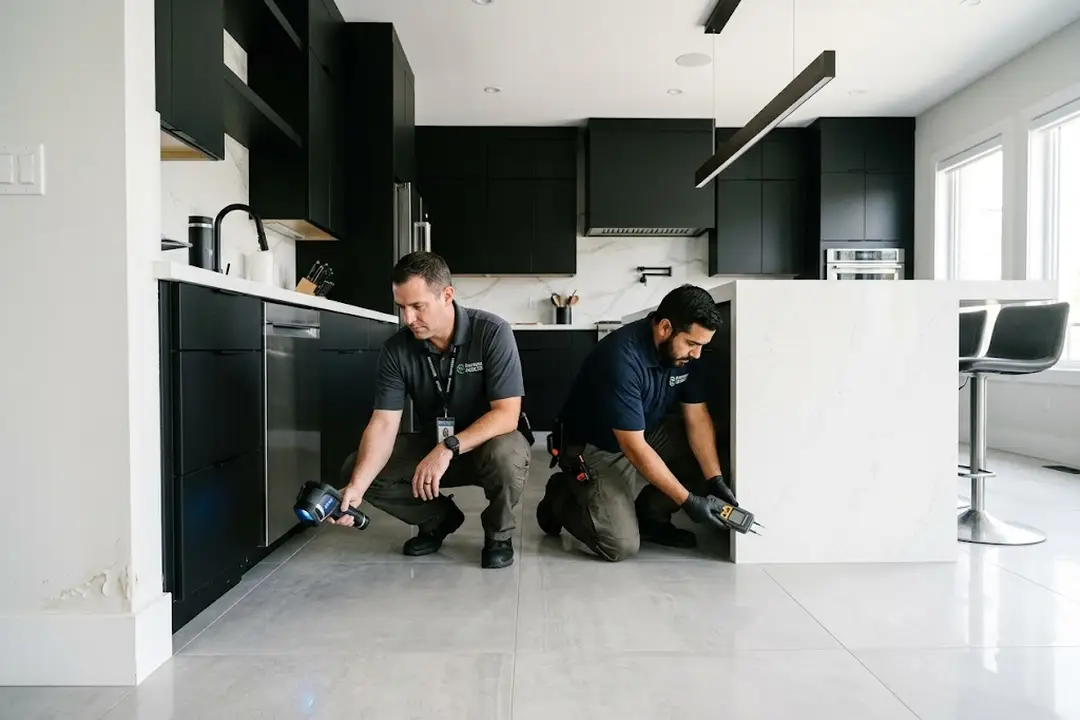
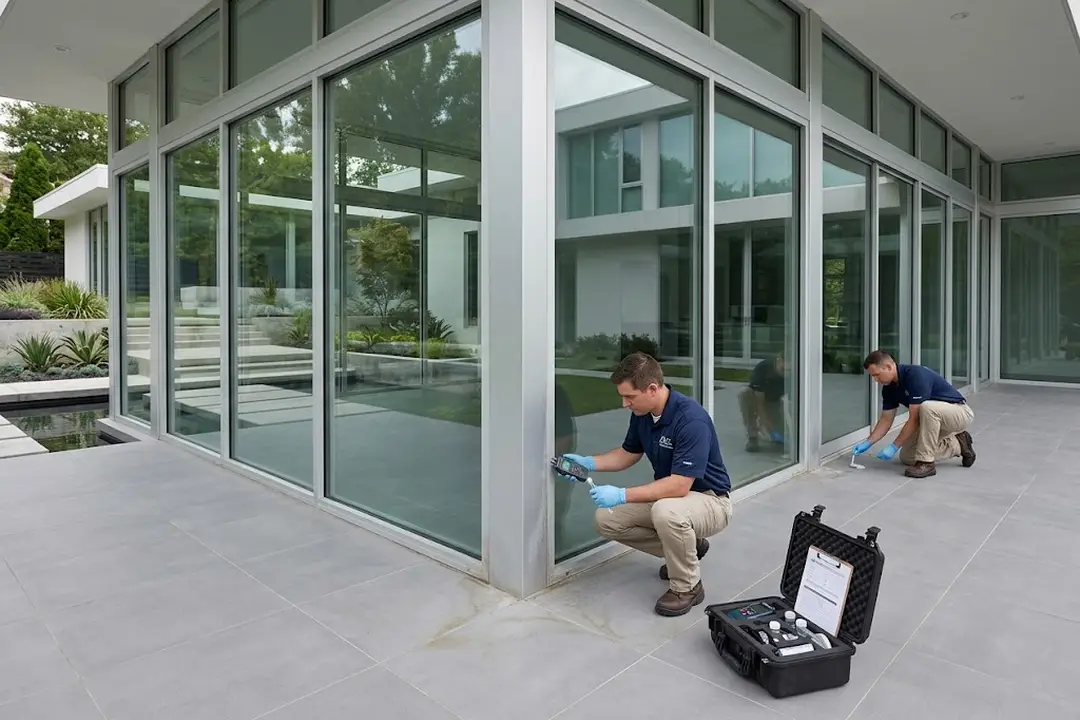
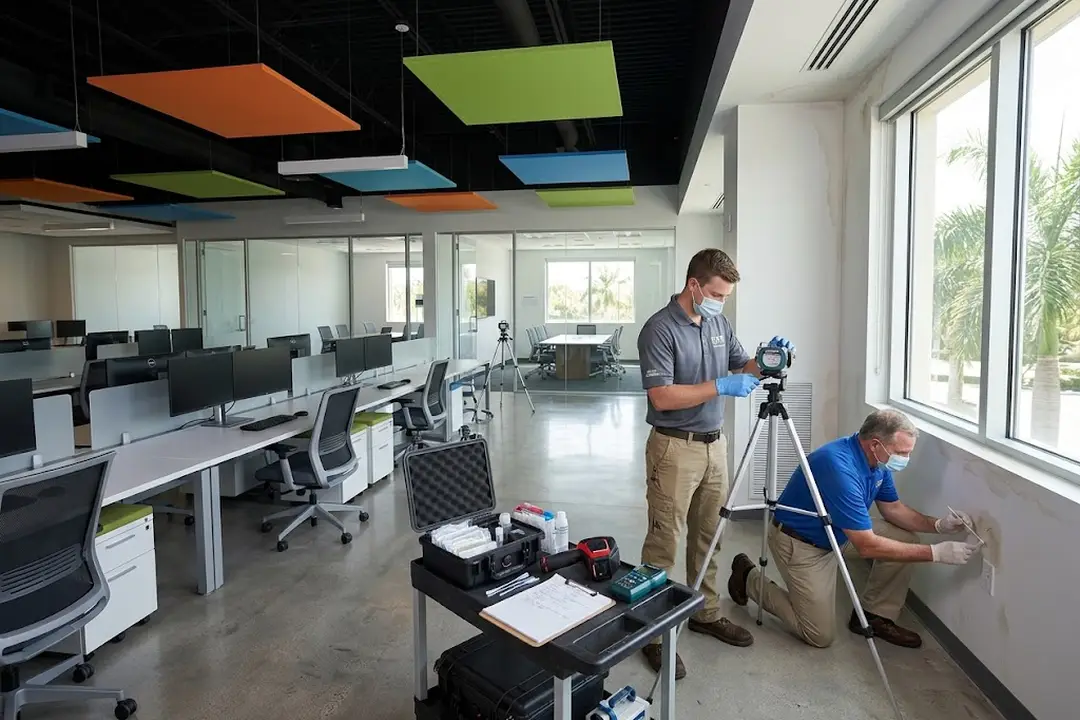
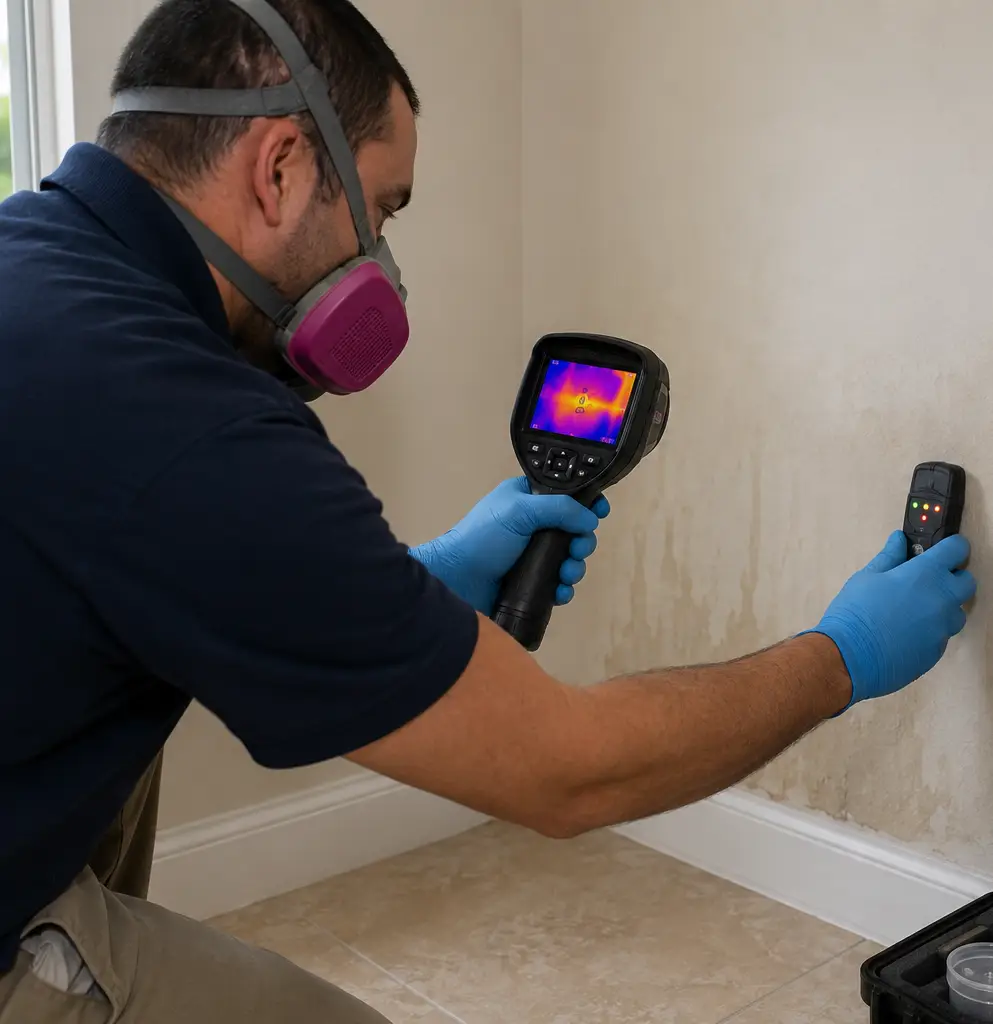
Male technician using thermal imaging and a moisture meter to detect hidden water damage in West Palm Beach.
How long after water damage does mold grow? Active surface growth typically becomes visible within three to seven days. Hidden mold and hidden water damage behind walls and under flooring can be weeks ahead of that. By the time the smell reaches you, the colony is already established.
The only way to stop it is complete water removal and water extraction, structural drying to IICRC S500 standards, and immediate remediation of any affected materials that can’t be dried within the critical window. Removing standing water and water-logged materials within the first hour of a call is the single most important factor in mold prevention.
WATER DAMAGE CATEGORIES AND MOLD RISK

Water Damage Category Determines Your Mold Risk

Not all water damage carries the same mold risk. IICRC S500 classifies water damage into three categories based on the contamination level of the water source. Category determines the remediation protocol and whether materials can be dried in place or must be removed.

01

Clean Water

Source is a clean supply line, broken appliance intake, or clean rainwater. Mold growth rate is still significant if not dried within 24 to 48 hours, but materials can often be dried in place if addressed quickly.

02

Gray Water

Source contains contaminants: overflowing appliances, dishwasher discharge, or toilet overflow without solids. Materials in contact with Category 2 water generally cannot be dried in place. Drywall and insulation are removed and replaced.

03

Black Water

Source is sewage backup, rising floodwater, or storm surge. All porous materials in contact must be removed as biohazard waste. Mold growth rate in Category 3 events is extremely rapid. This is the category for most hurricane, tropical storm damage, and flood events in West Palm Beach.

If you’re unsure of your water damage category, professional mold testing after the initial drying phase confirms whether active mold contamination is present and identifies the species before remediation begins.

HURRICANE, FLOOD, AND PIPE BURST MOLD

Mold After Hurricane, Flooding, and Pipe Bursts in West Palm Beach

West Palm Beach sits in one of the most active hurricane corridors in the United States. Hurricane season runs June through November, and every major storm event creates thousands of water damage and mold cases across Palm Beach County simultaneously. Tropical storms and storm flooding in South Florida can create mold growth conditions even without a direct hurricane hit when heavy rainfall overwhelms drainage systems.
Male technician assessing hurricane-related water and mold damage inside a West Palm Beach home.

Hurricane Mold Damage in West Palm Beach

Hurricane mold damage in West Palm Beach typically involves Category 3 storm surge or wind-driven rain entering through failed roof sections, impact windows, or breached doors. The water carries contaminants, classifying it immediately as Category 3. Mold growth is active within 24 to 48 hours. Mold after a hurricane in West Palm Beach is one of the highest-volume calls we handle every season.
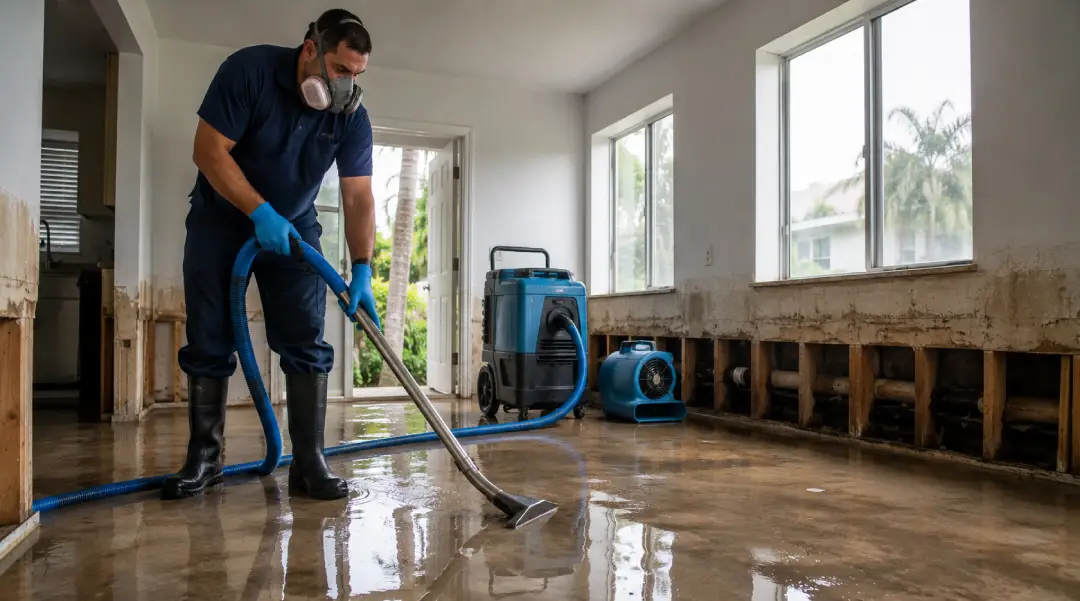
Male restoration technician extracting floodwater from a damaged West Palm Beach home.

Flood Mold Removal in West Palm Beach

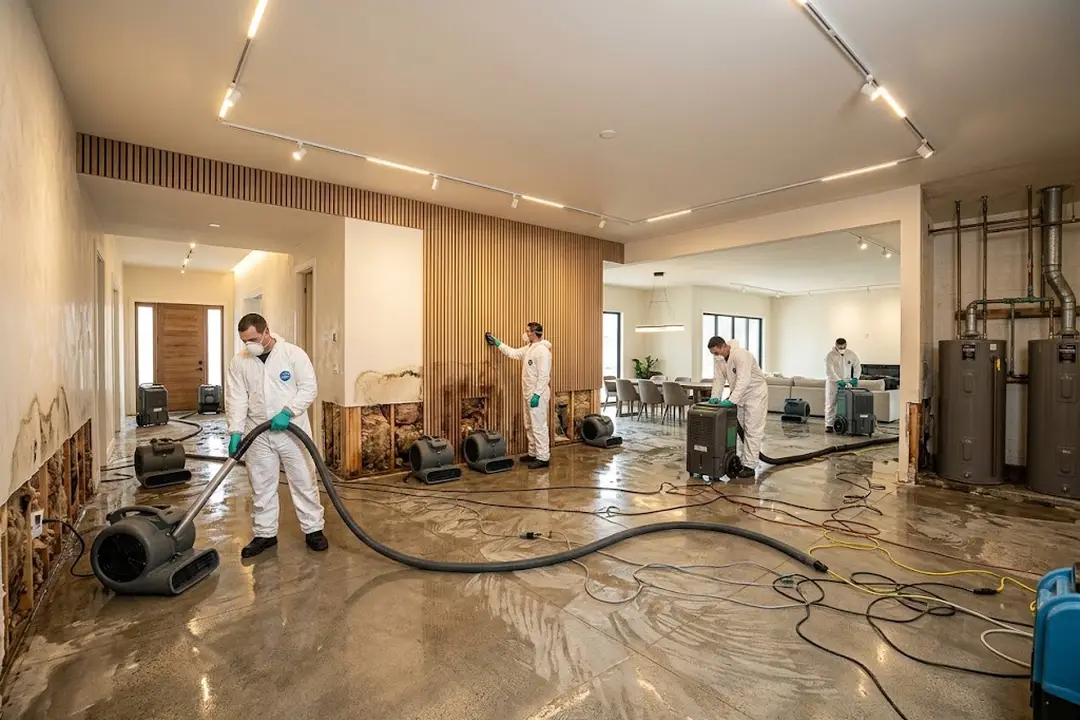
Flood mold removal in West Palm Beach after neighborhood flooding or Intracoastal storm surge involves full water extraction, HEPA vacuuming of contaminated materials, and structural drying of all framing and subflooring. Mold after flooding in West Palm Beach on ground-floor properties spreads rapidly to wall cavities and insulation if not addressed within the first day.
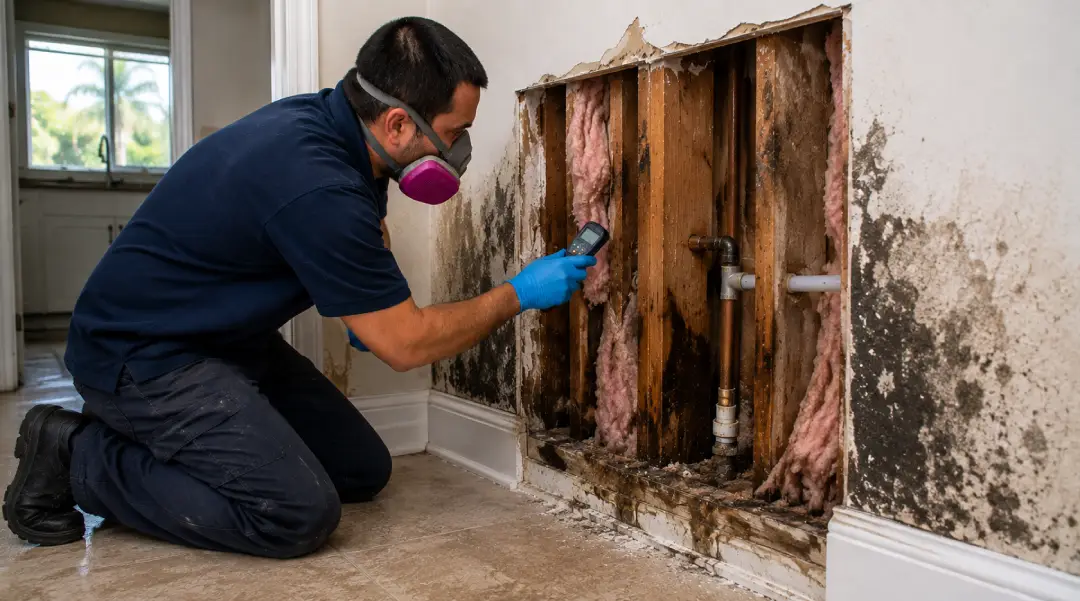
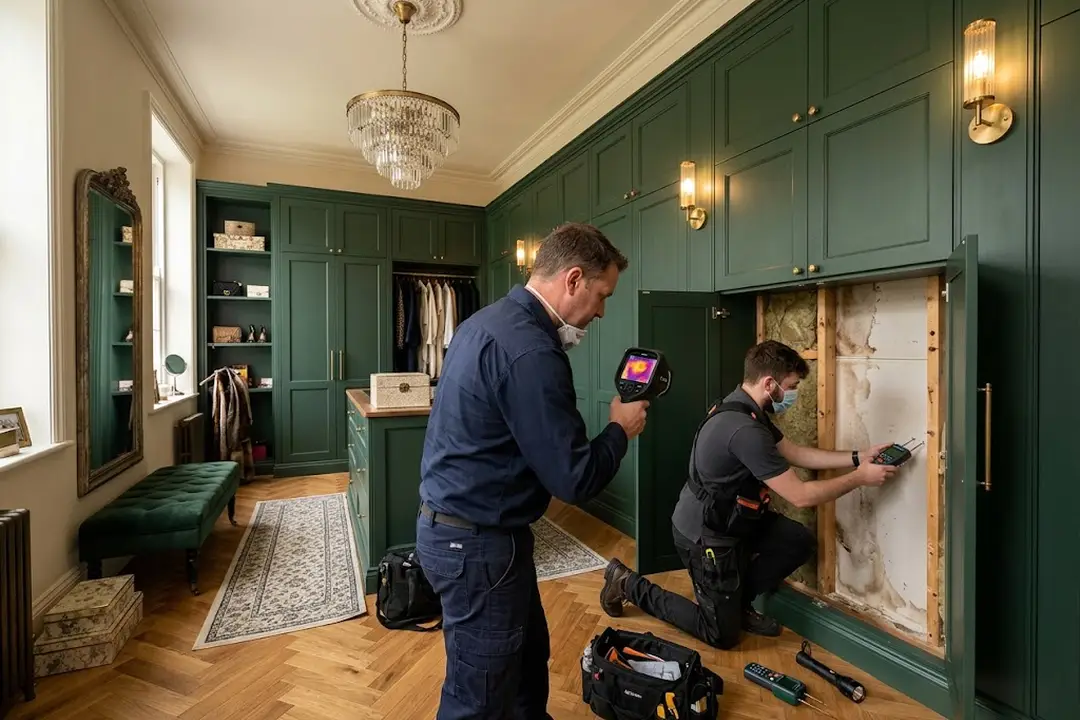
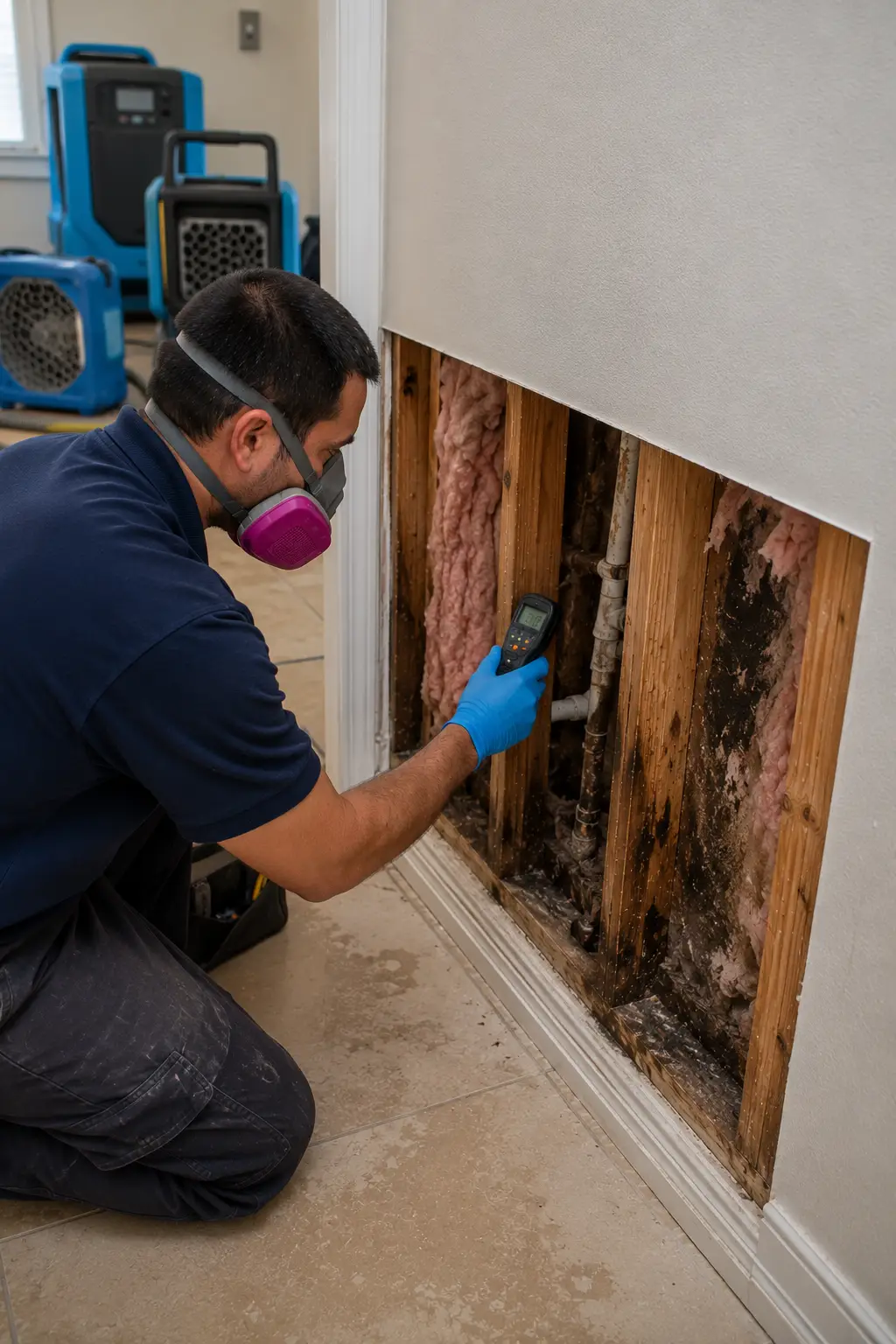
Male technician inspecting mold and hidden moisture around a burst pipe inside a West Palm Beach wall cavity.

Mold After Pipe Burst in West Palm Beach

Mold after pipe burst in West Palm Beach is typically Category 1 or 2 depending on the line. The damage pattern is usually concentrated but deep, with water tracking inside wall cavities for significant distances from the break point. Plumbing leaks and water leaks from slow supply line failures are often the most damaging because they go undetected the longest. Mold from water leak in West Palm Beach from a slow supply line leak is often the most damaging because it goes undetected the longest.
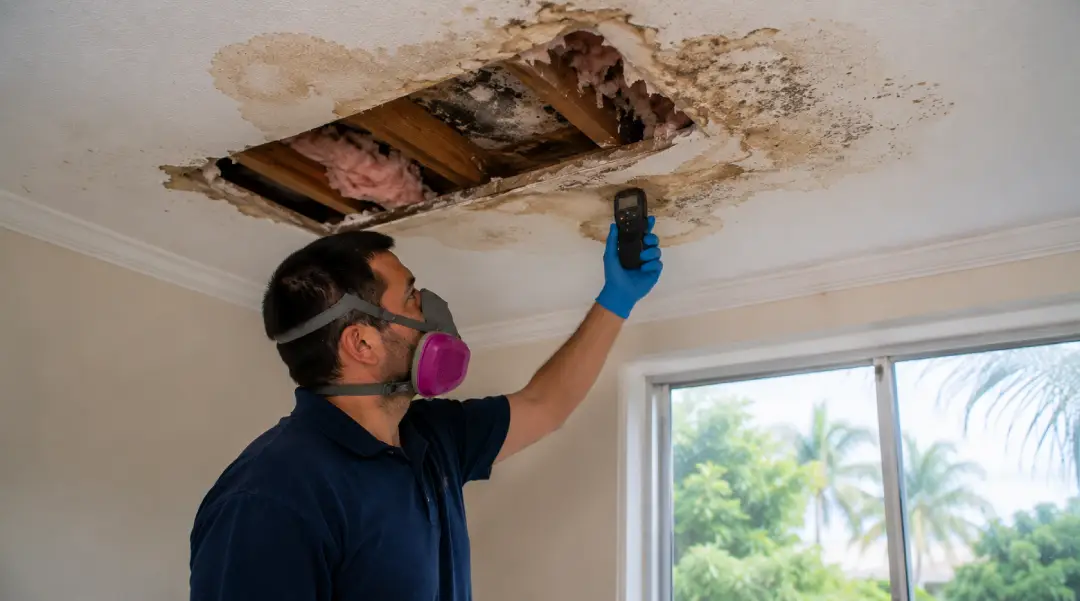
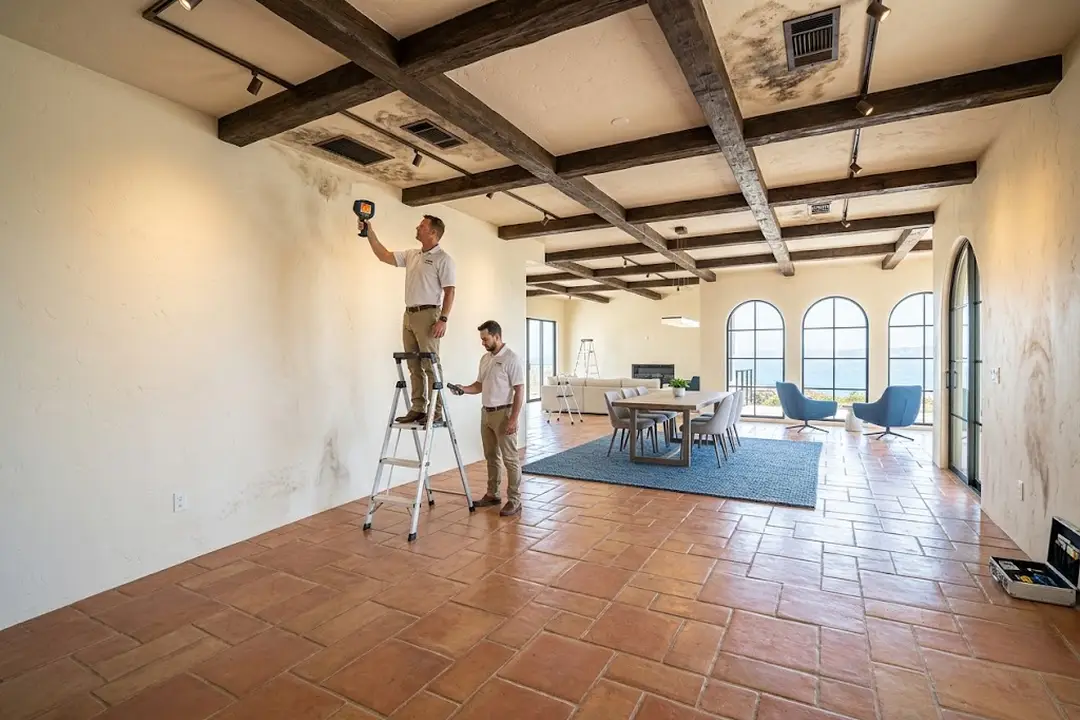
Male technician checking a water-damaged ceiling for hidden mold after a roof leak in West Palm Beach.

Mold From Roof Leak in West Palm Beach

Mold from roof leak in West Palm Beach enters ceiling cavities and wall interiors before appearing as a stain on drywall. Water-damaged ceilings spread post-water-damage mold to wall cavities faster than any other entry point in a West Palm Beach property. By the time a ceiling stain is visible, active mold growth is already established in the paper facing of the drywall and the insulation above it.
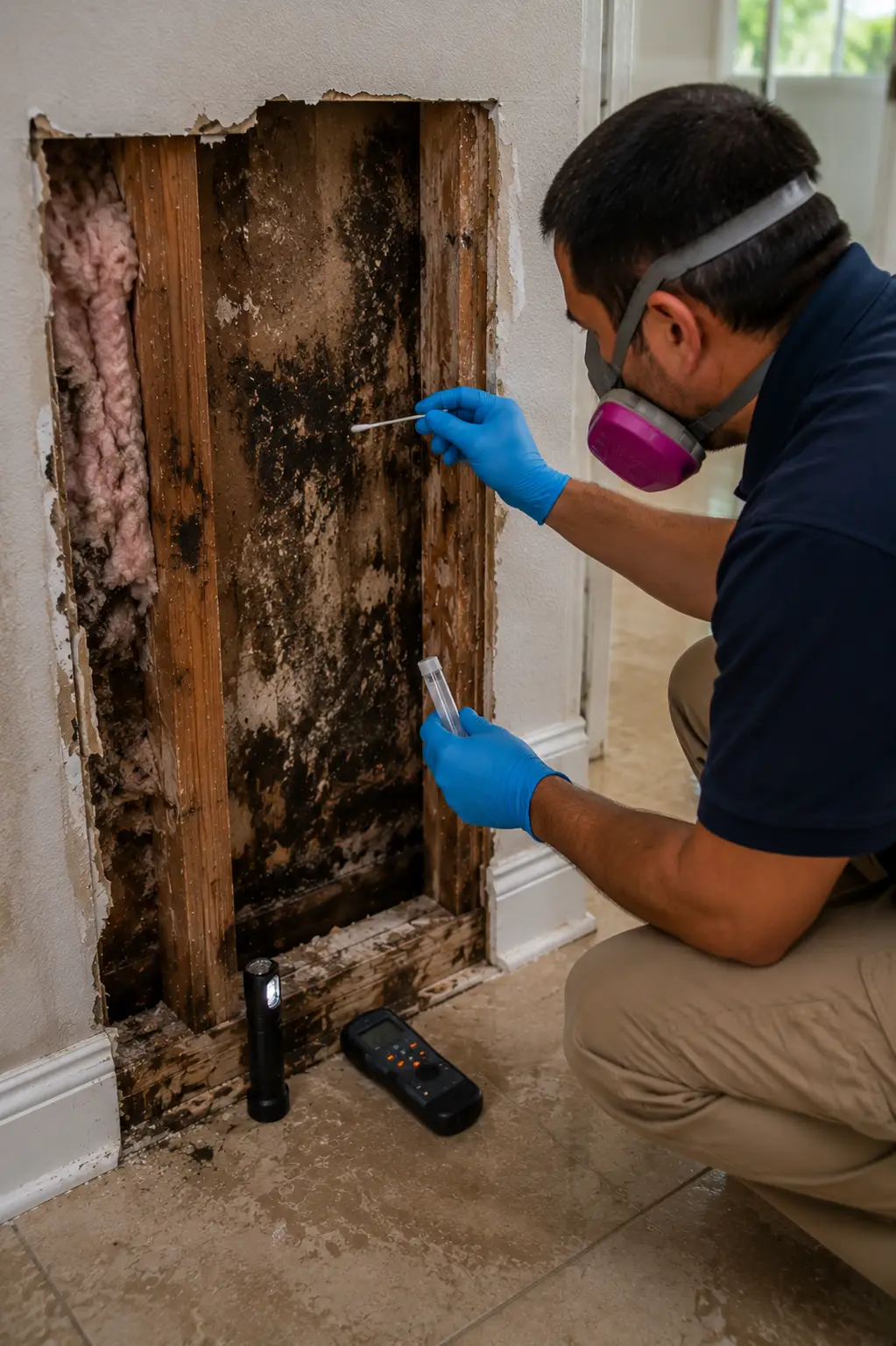
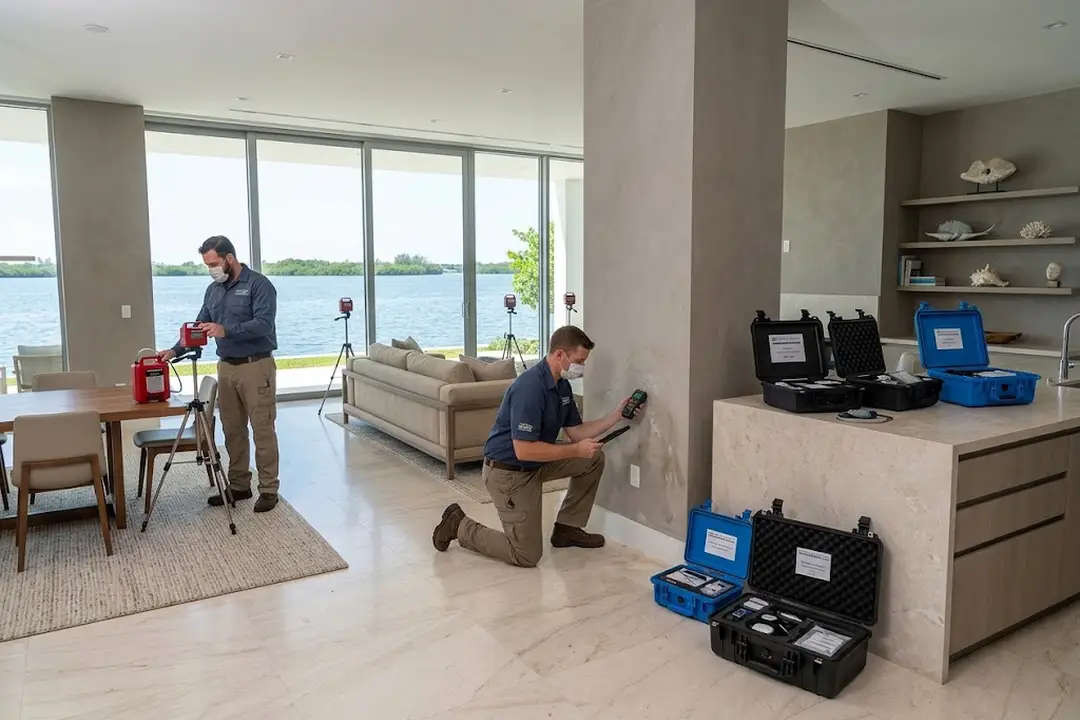
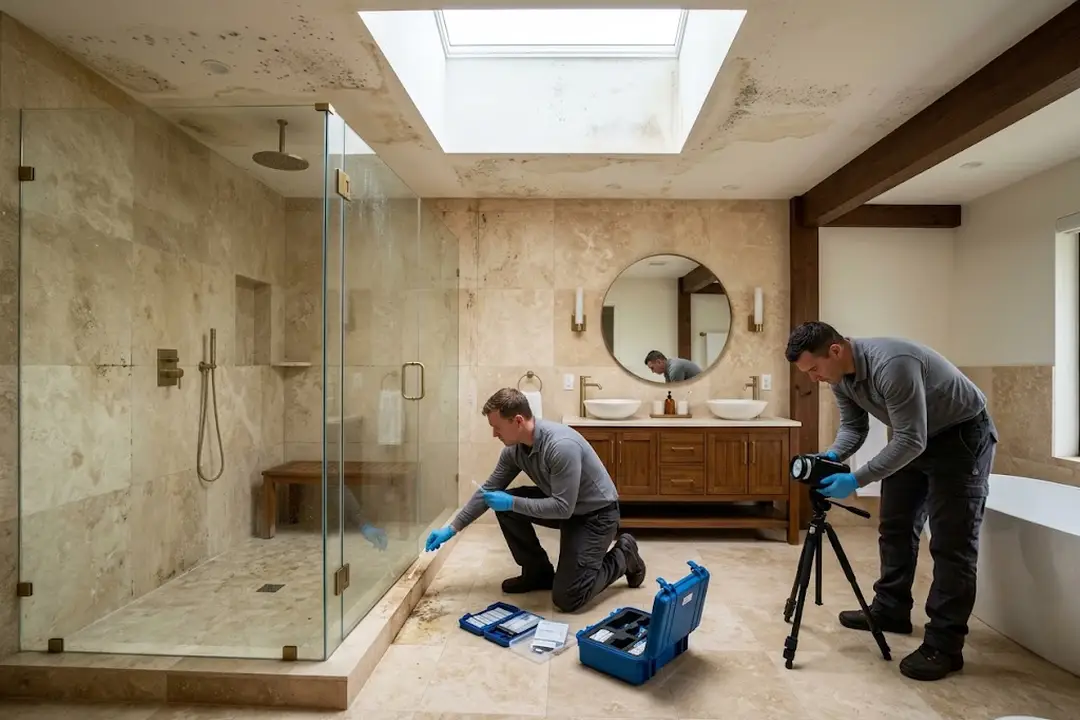
Male mold assessor collecting a sample from suspected dark mold after water damage in a West Palm Beach home.
CAN WATER DAMAGE CAUSE BLACK MOLD?

Can Water Damage Cause Black Mold in Your West Palm Beach Home?

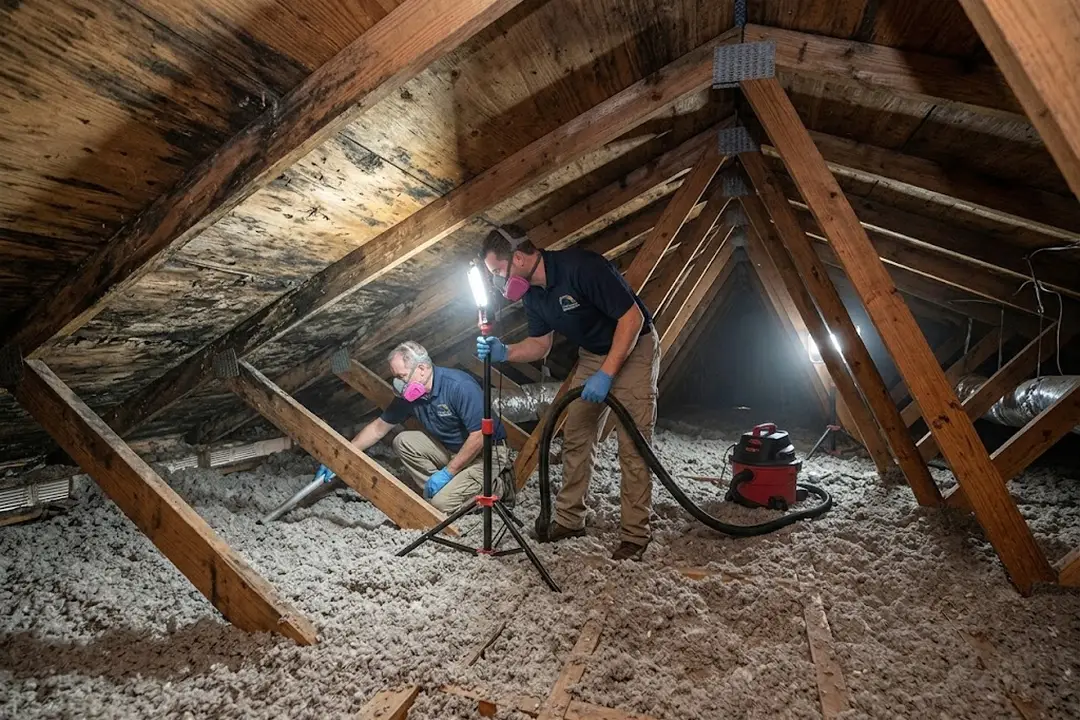
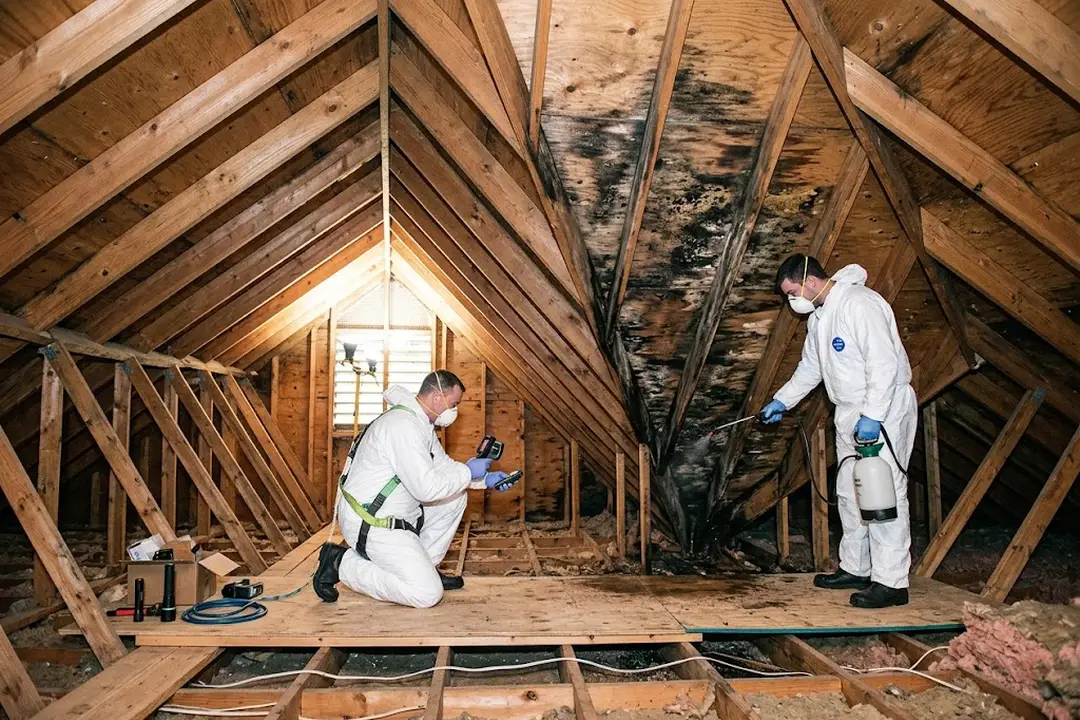
Yes. Stachybotrys chartarum, the species commonly called black mold, thrives specifically on wet cellulose materials: drywall paper, wood framing, and ceiling tiles. Water damage that saturates these materials and is not fully dried within 48 to 72 hours creates ideal conditions for Stachybotrys growth.

Category 2 and Category 3 water events carry the highest Stachybotrys risk. Storm surge, sewage backup, and prolonged roof leaks into wall cavities are the most common triggers in West Palm Beach.

If you’ve had significant water damage and you’re now seeing dark staining on drywall, smelling a persistent musty odor, or experiencing respiratory symptoms in specific rooms, black mold removal protocol may be required rather than standard water damage remediation. Mold infestation and mold contamination involving Stachybotrys require species identification through lab testing to confirm before the removal scope is finalized.

WHAT TO DO RIGHT NOW

What to Do After Water Damage and Mold in West Palm Beach

01
Step 1: Stop the water source. Shut off the main water supply if it’s a plumbing failure. Contact your roofer or board up openings if it’s storm-related. No remediation is effective if water is still entering.
02
Step 2: Do not run central air. Your HVAC system will distribute mold spores throughout the property if mold growth is already active. Keep it off until a professional assesses the situation.
03
Step 3: Document everything before touching it. Take photos and video of all affected areas for your insurance claim. Do not discard damaged materials until your adjuster has seen them or the claim is documented.
04

Step 4: Call for rapid response and emergency response within the first 24 hours. The 24- 48-hour mold growth window is real. Our emergency mold removal team responds same-day across Palm Beach County with water extraction and drying equipment. Mold prevention starts here.

05
Step 5: Do not attempt DIY drying. Household fans and dehumidifiers cannot achieve the psychrometrics required to dry building materials to IICRC S500 standards. Visible surface drying does not mean the materials inside the wall cavity are dry.
OUR WATER DAMAGE MOLD REMEDIATION PROCESS

Our Water Damage Mold Remediation Process in West Palm Beach

As a licensed mold remediation and water damage restoration company following IICRC S500 for water damage and IICRC S520 for mold remediation, our process is documented at every step for insurance, legal, and regulatory use. A mold inspection by a licensed Florida DBPR Mold Assessor precedes all remediation work.

1

Emergency Water Extraction

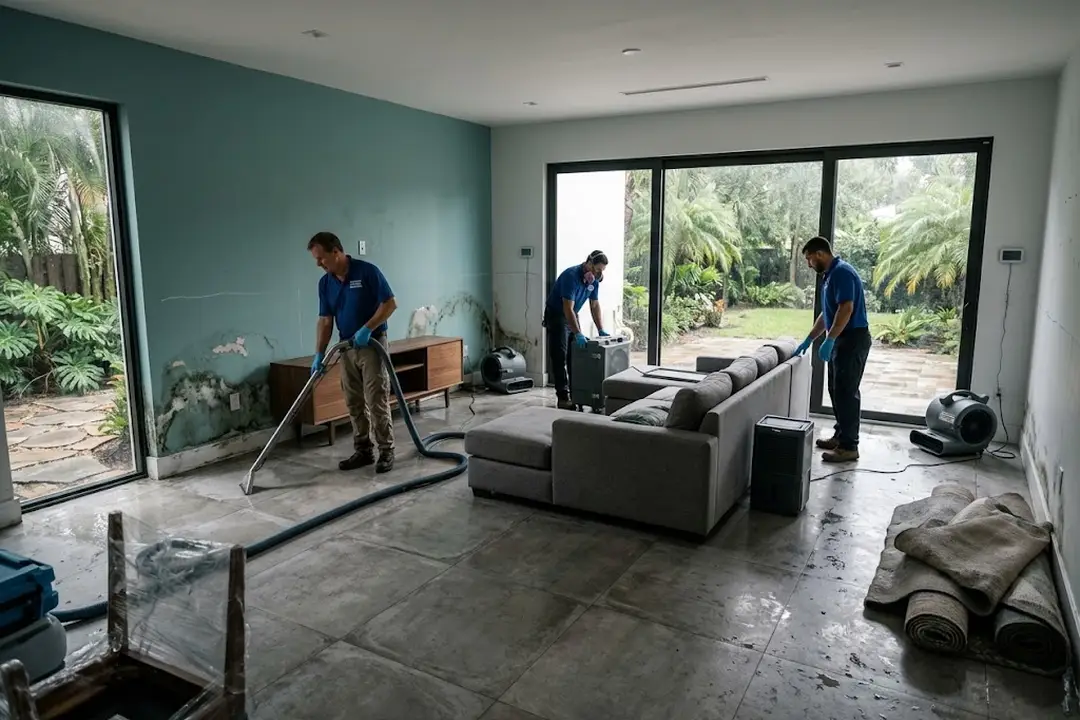
A structural assessment and property damage assessment begin immediately upon arrival. Industrial water extraction equipment removes standing water and pulls moisture from carpet, subfloor, and wall cavities.
2

Moisture Mapping

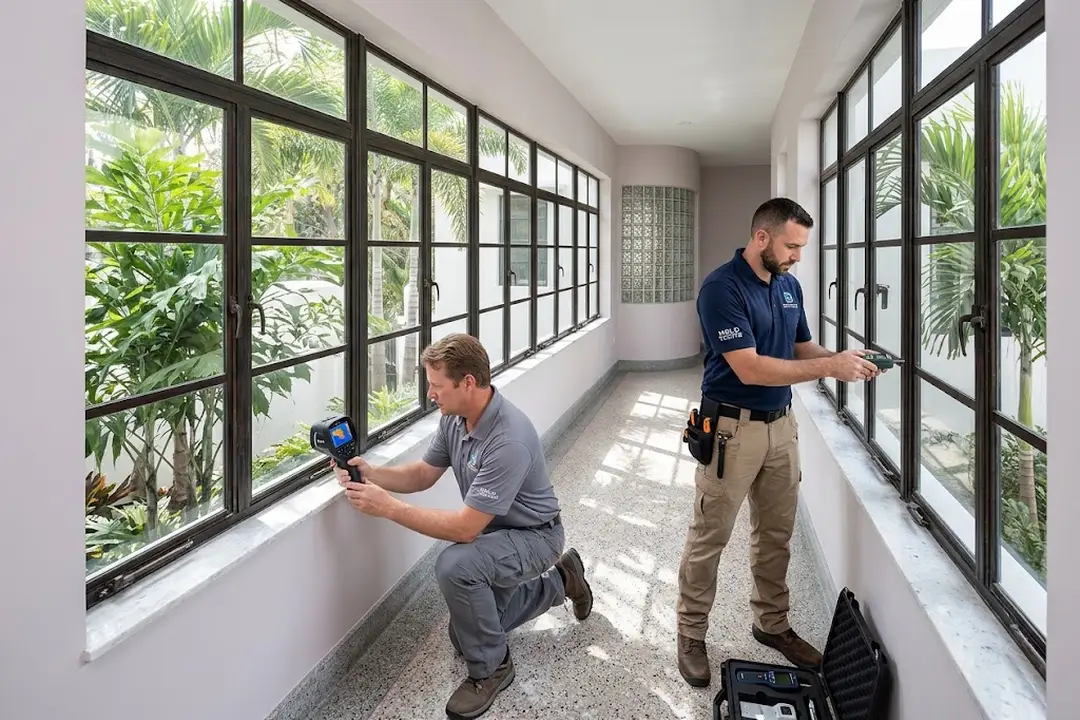
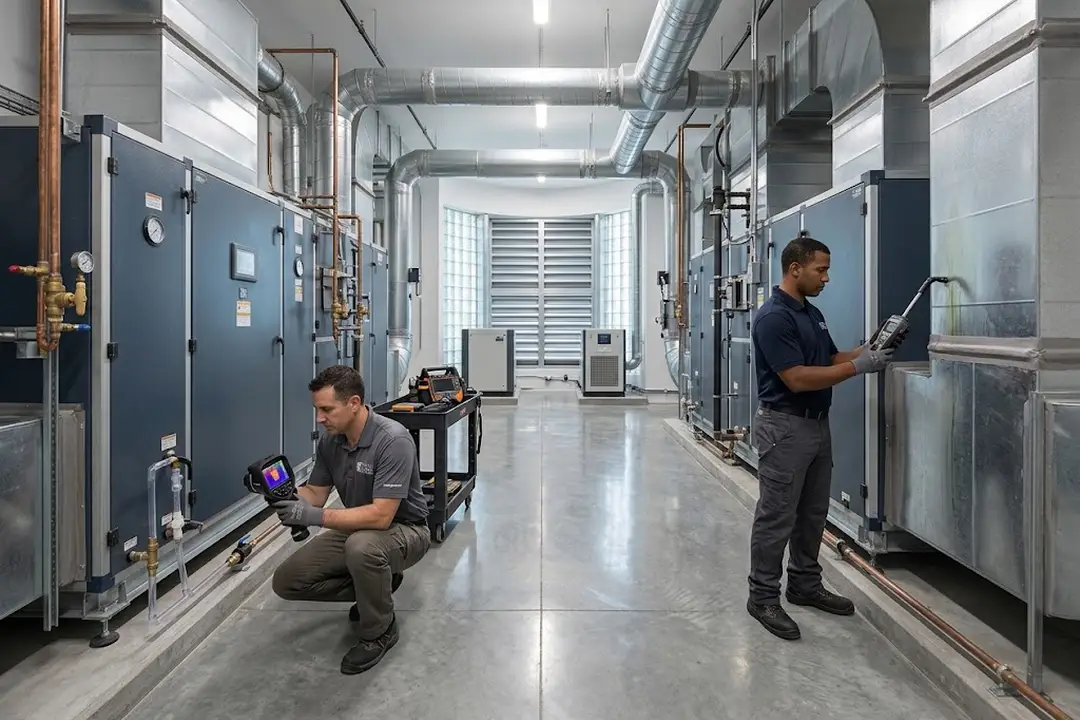
Thermal imaging cameras and calibrated moisture meters identify all wet materials throughout the structure. Moisture mapping documents the full extent of saturation before any drying equipment is placed.
3

Structural Drying

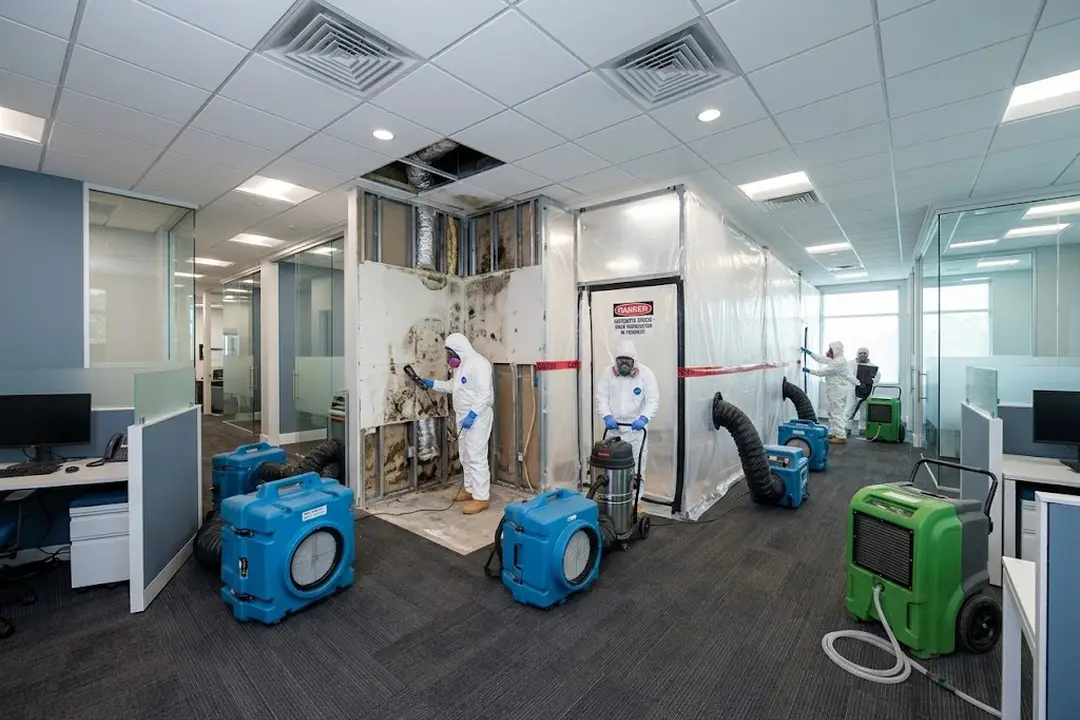
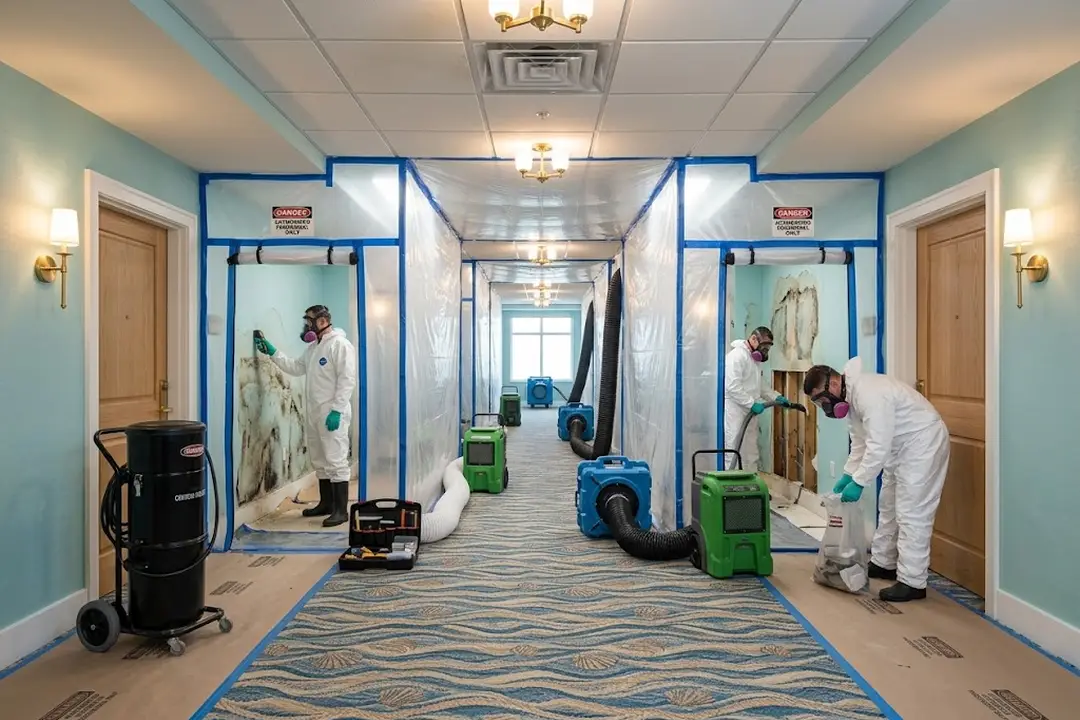
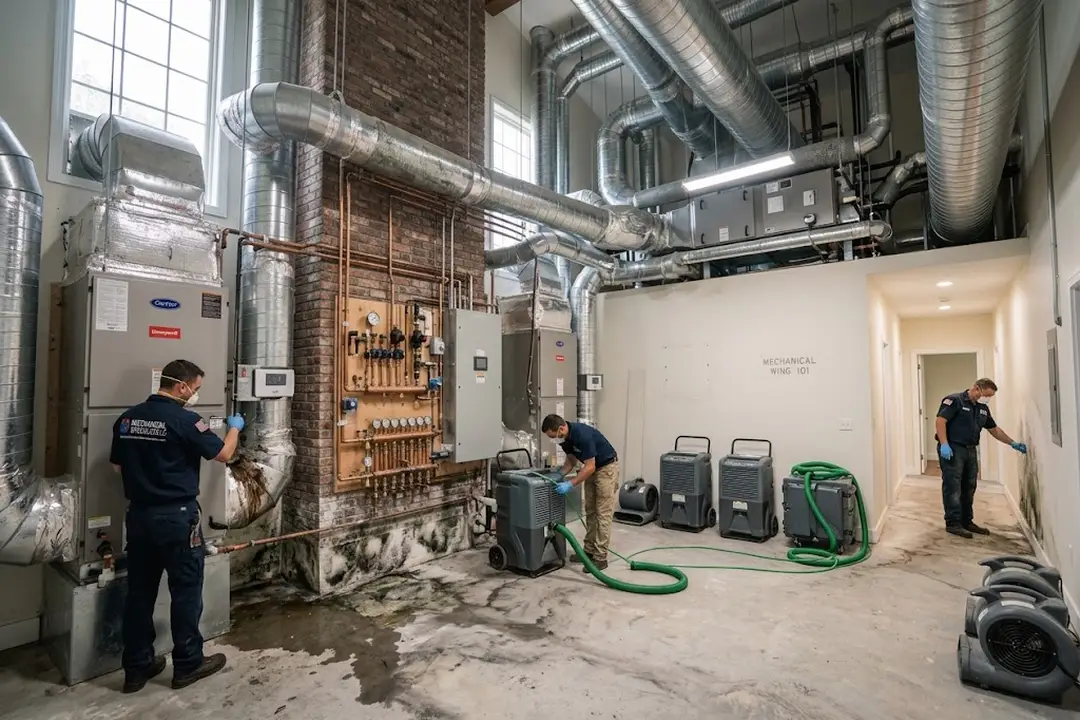
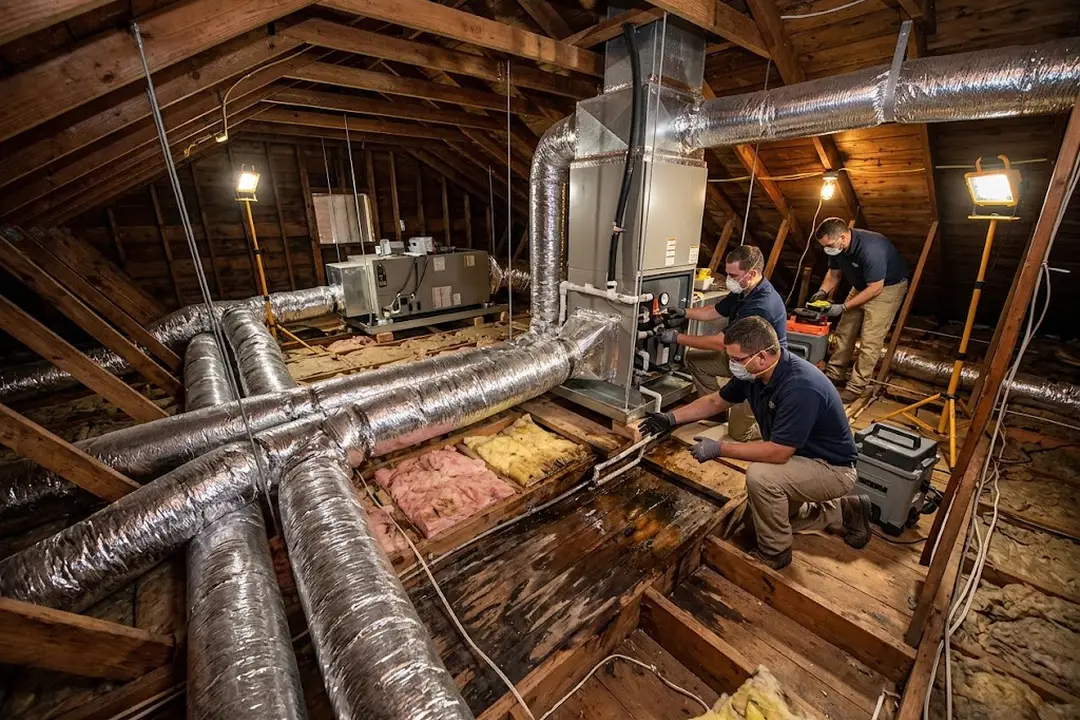
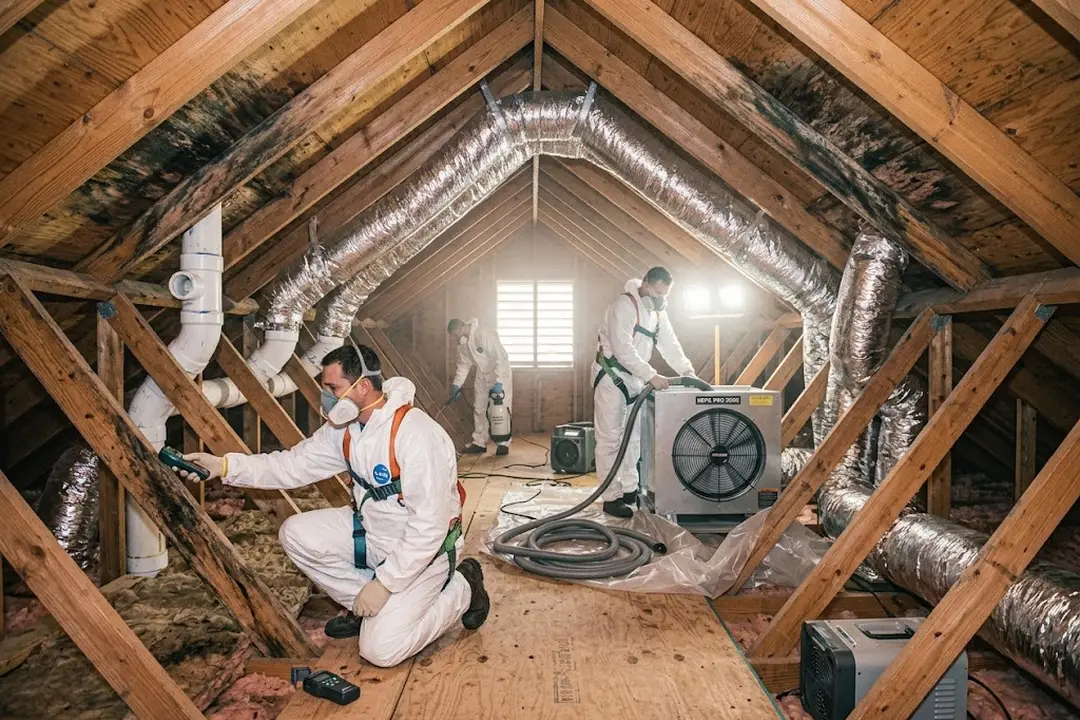
Industrial dehumidifiers and high-velocity air movers are placed per psychrometrics calculations. Commercial dehumidifiers, air scrubbers, and HEPA air filtration units are deployed throughout the affected space. Moisture monitoring continues daily until all materials reach dry standard readings per IICRC S500.
4

Mold Containment and Remediation

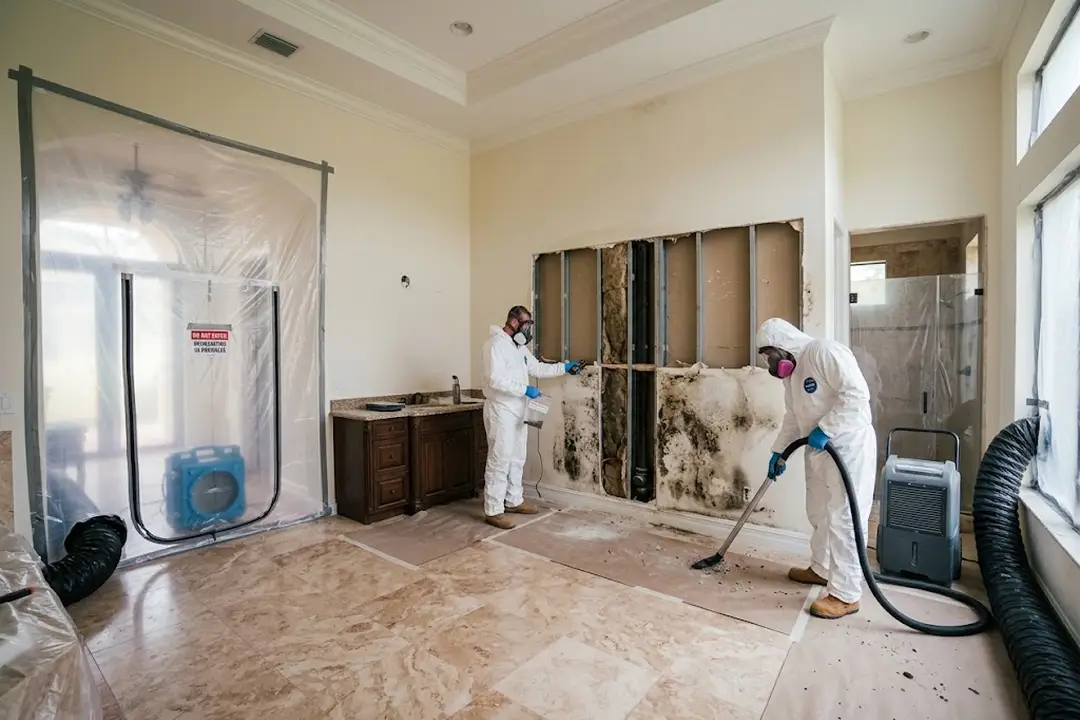
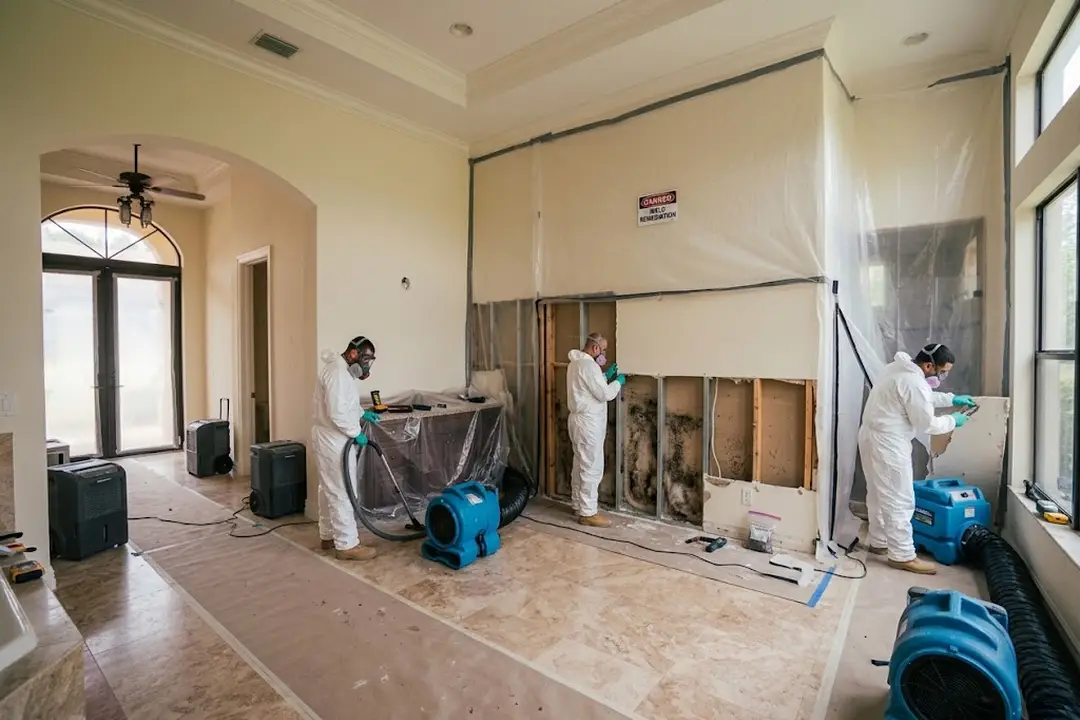
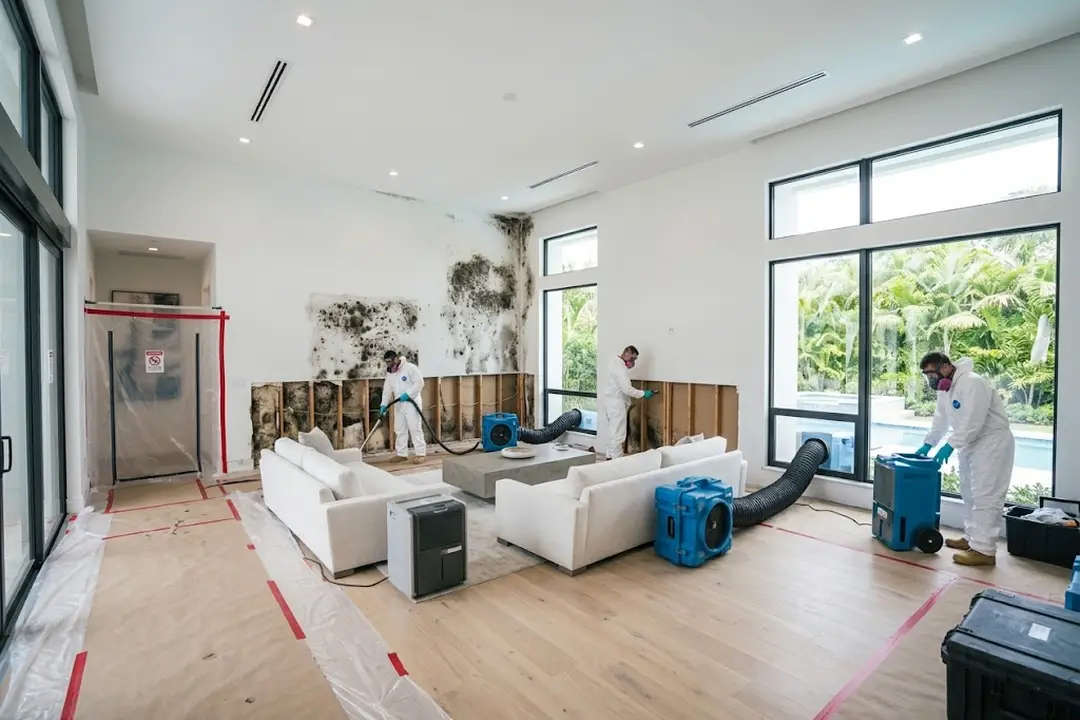
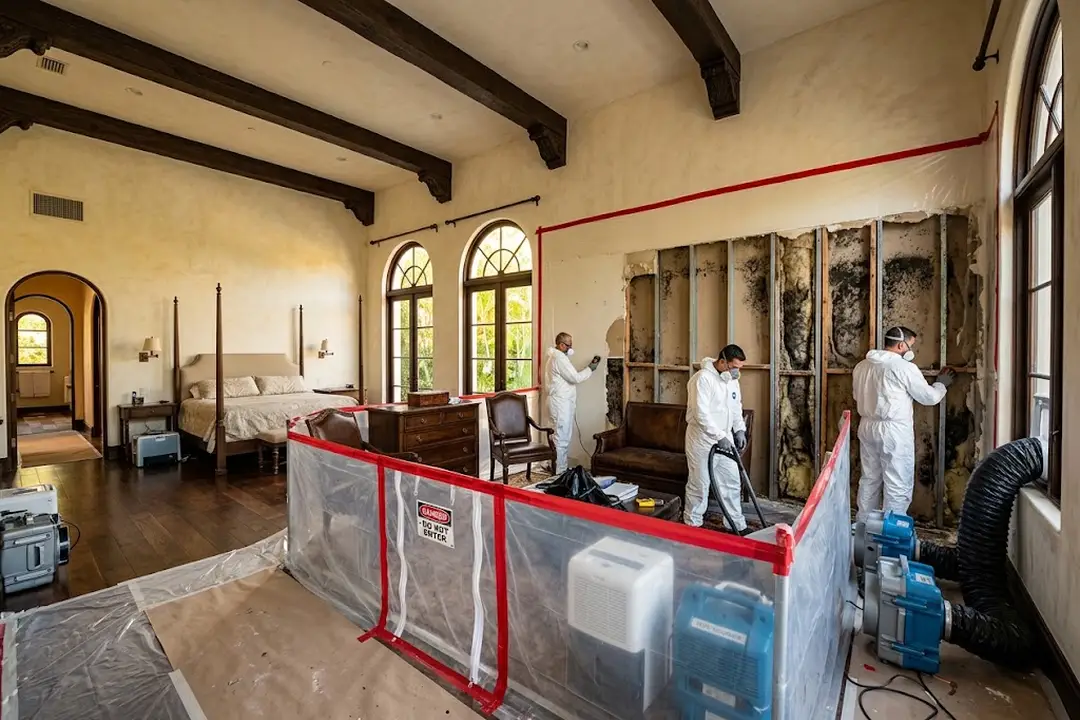
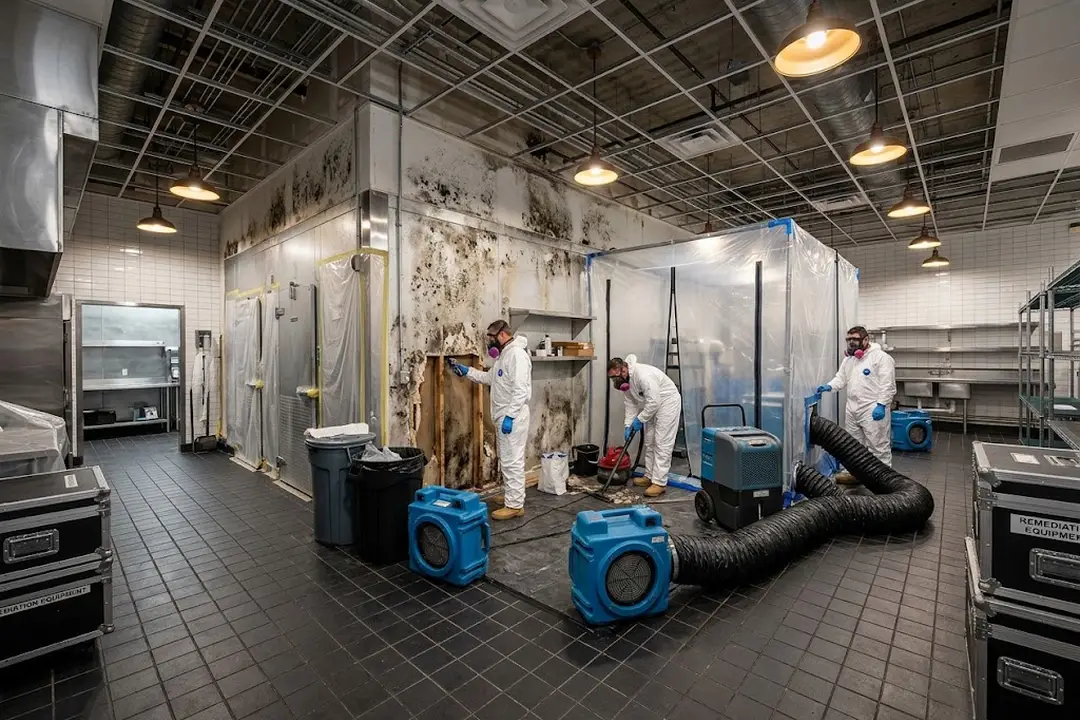
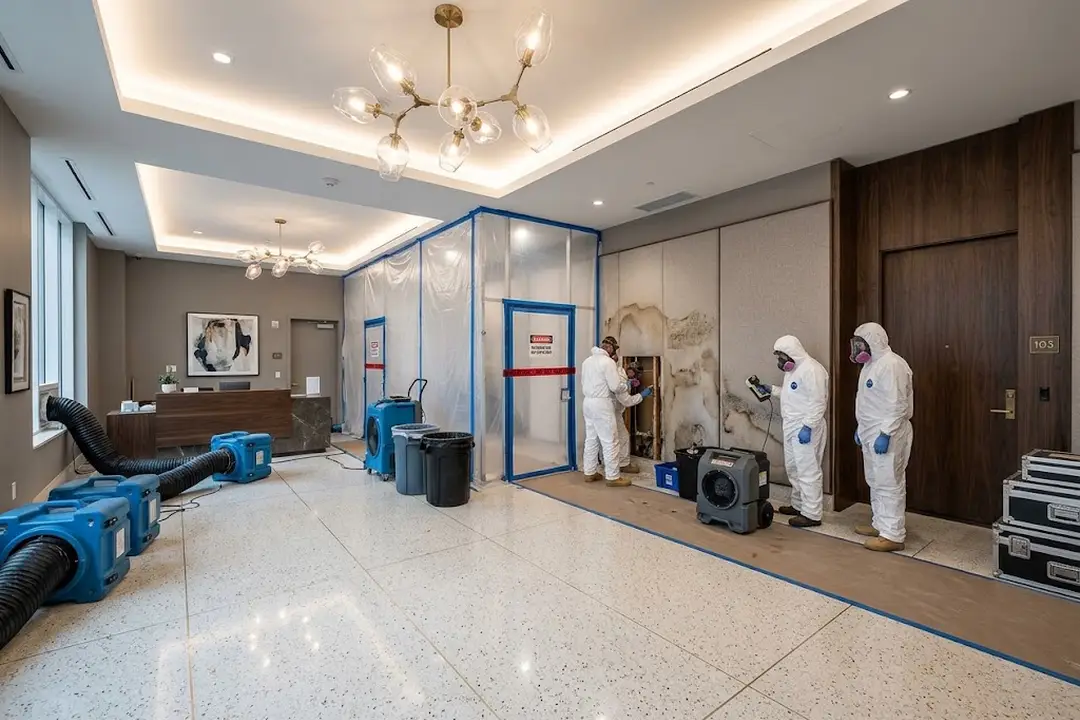
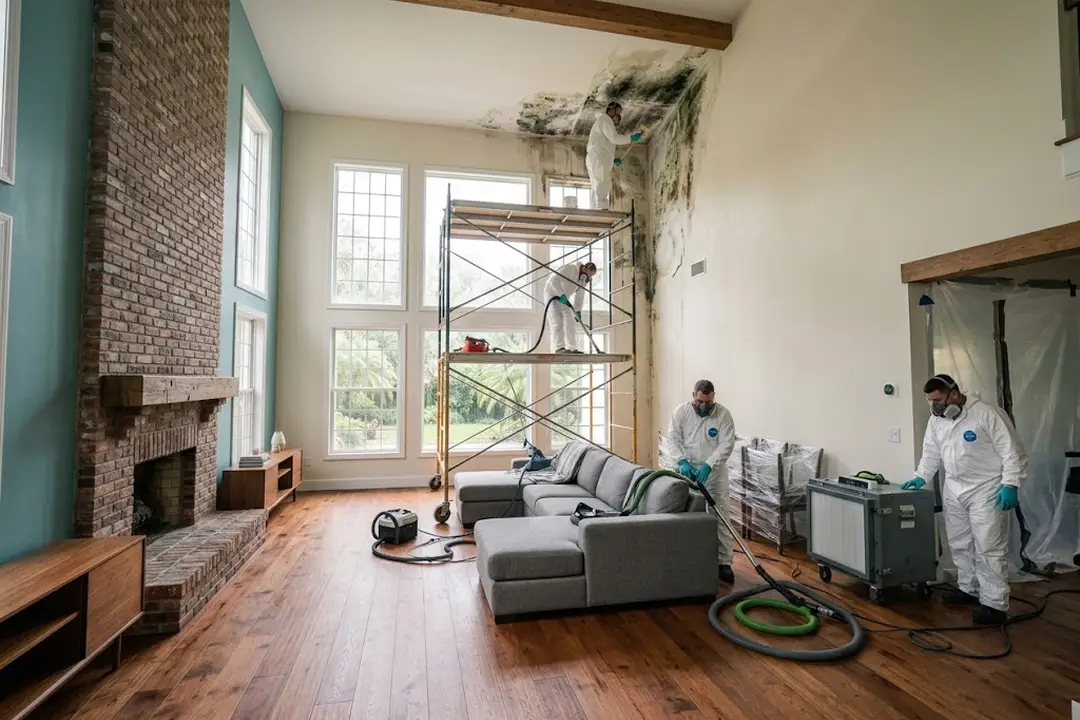
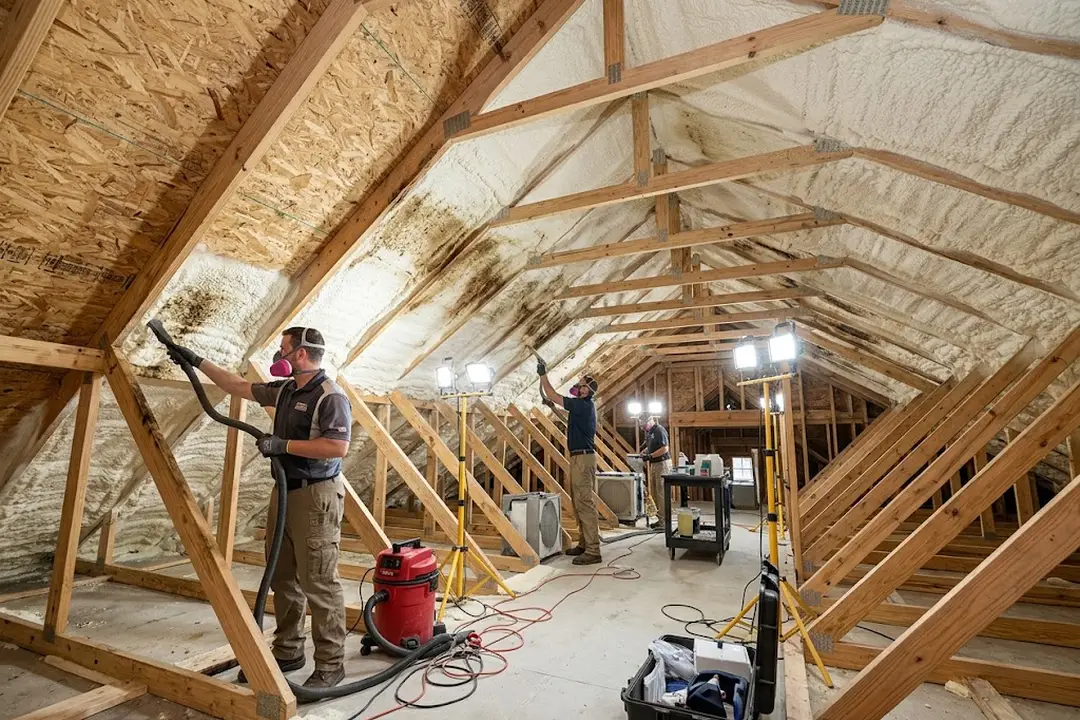
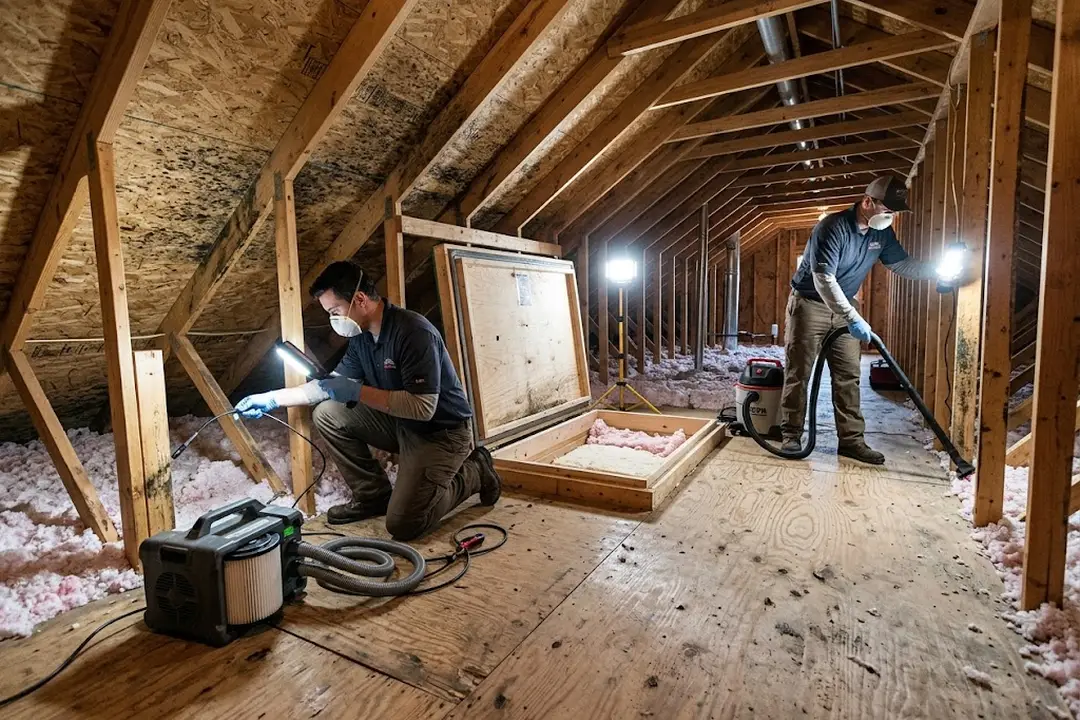
Affected materials that cannot be dried within the critical window are removed under containment. Active mold growth is treated per IICRC S520 protocol including HEPA vacuuming, antimicrobial treatment, and disposal of non-salvageable materials. Cleaning and sanitizing of all salvageable surfaces is completed under containment. Odor removal treatment is applied to address musty odors in the air and in salvageable building materials.
5

Reconstruction Preparation

Clean, dry, treated surfaces are documented with photos and moisture meter readings before any reconstruction begins.
6

Post-Remediation Clearance

An independent licensed Mold Assessor conducts clearance testing. The clearance report is formatted for insurance adjuster submission and property re-occupancy.
WATER DAMAGED WALLS MOLD REMOVAL

Water Damaged Walls Mold Removal in West Palm Beach

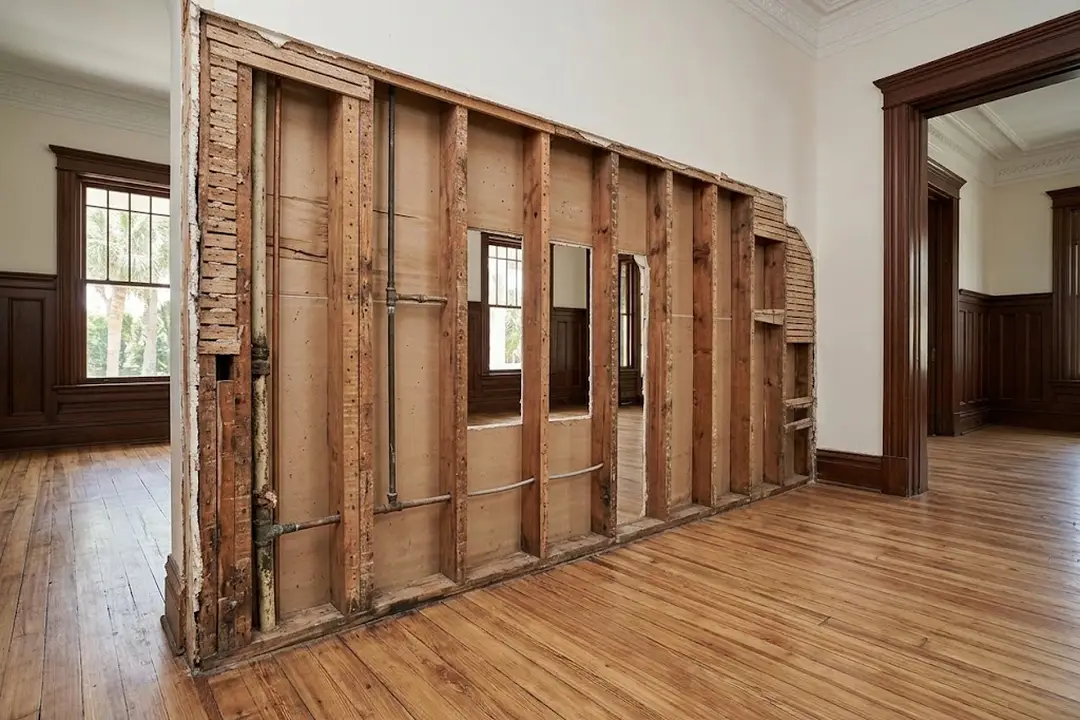
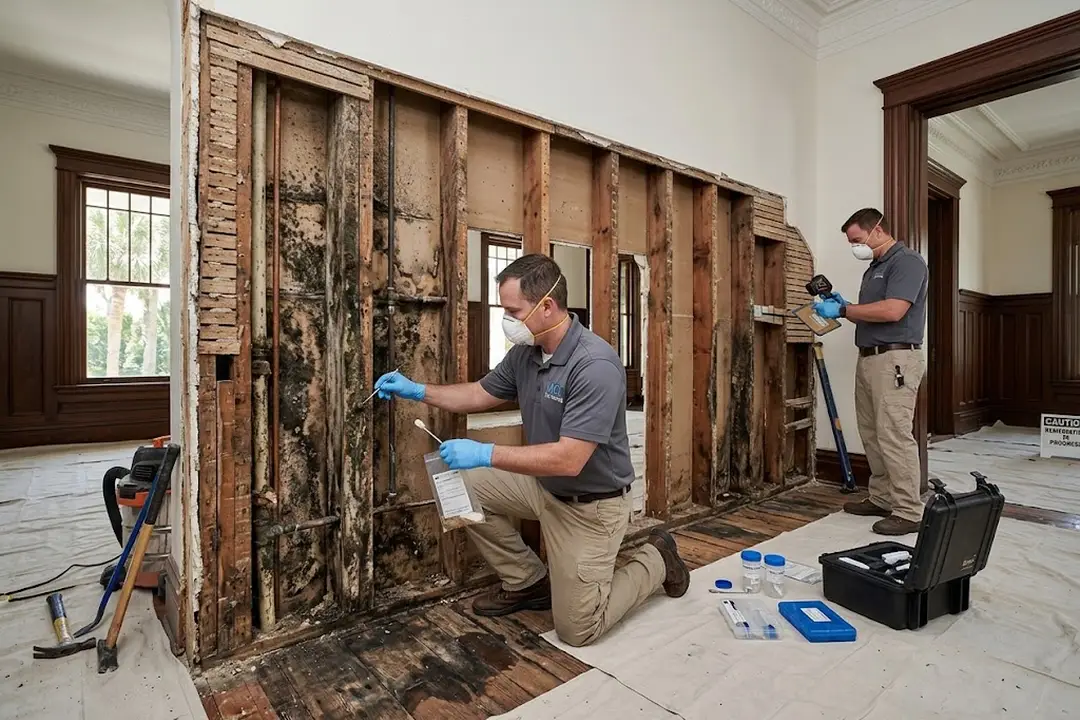
Water damaged walls mold removal in West Palm Beach requires a different approach than surface mold treatment. Water infiltrates drywall paper, wood studs, and insulation behind the visible surface. By the time the wall feels damp from the outside, the interior framing has often been wet for days.

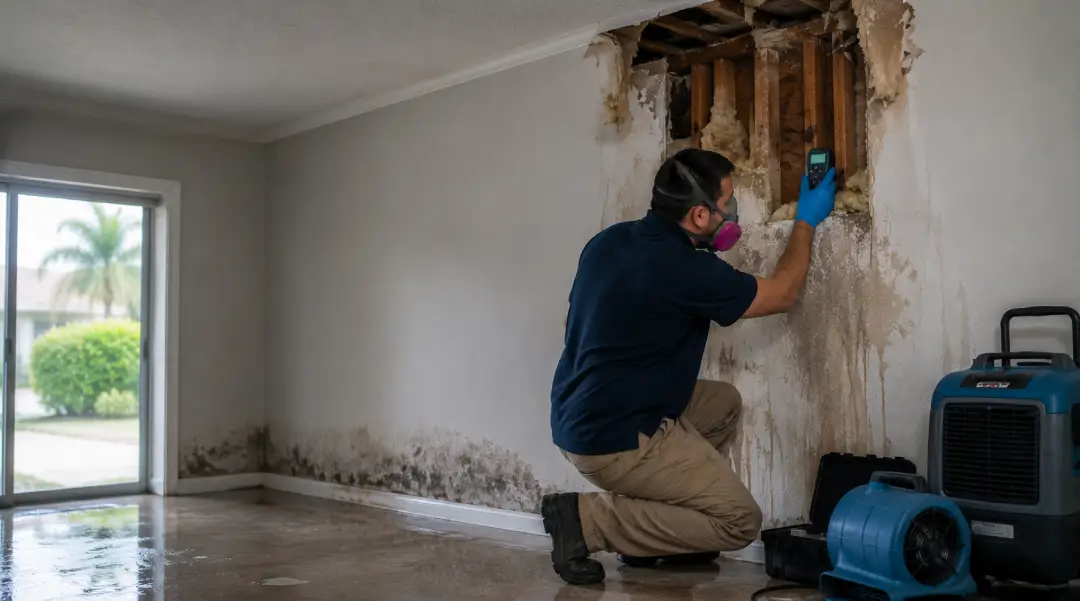
We use thermal imaging to confirm hidden water damage and moisture presence inside wall cavities before opening them. Once the extent of saturation is mapped, affected drywall and insulation are removed to expose framing for treatment and structural drying. We don’t cut exploratory holes. We know exactly where to open the wall before the first cut is made. Water-damaged flooring and subflooring are assessed with the same moisture mapping approach before removal is authorized.

Hidden mold and water-damaged ceilings are documented in the same inspection pass. Mold remediation after flooding in West Palm Beach on ground-floor walls follows the same process at larger scale, with entire sections of drywall removed from the flood line down, framing treated and dried, and replacement drywall installed only after clearance readings confirm the structure is ready.

Male technician inspecting exposed framing during water-damaged wall mold removal in West Palm Beach.
INSURANCE

Flood Insurance, FEMA, and Homeowners Insurance for Water Damage Mold in West Palm Beach

Insurance handling is part of our service, not a separate process you manage on your own.
01

Homeowners Insurance

Standard homeowners insurance in West Palm Beach covers mold removal after water damage from sudden and accidental events: pipe burst, appliance failure, and roof damage from a storm. It does not cover mold from long-term humidity accumulation or deferred maintenance. We provide the documentation your adjuster needs to approve the claim. We serve property owners, landlords, and property managers across Palm Beach County with documentation formatted for each insurance carrier type.
02

Flood Insurance (NFIP and Private)

FEMA’s National Flood Insurance Program (NFIP) covers structural damage from flooding including mold remediation when flooding is the documented cause. NFIP policies and private flood insurance carriers require specific documentation formats. We work with both and provide all required reports.
03

Hurricane Damage Claims

Hurricane mold damage in West Palm Beach claims require documentation of the wind or water entry point, the category of water damage, the extent of mold growth, and the remediation scope completed. Our written reports cover all four. We coordinate directly with public adjusters when claims are complex or disputed.
04

Call For Water Damage Mold Removal:

1 (728) 231-9060
COST

Water Damage Mold Removal Cost in West Palm Beach

–

Flood insurance and homeowners insurance cover the majority of remediation costs when the event is covered. Out-of-pocket costs are typically limited to your deductible.

Written, itemized quote provided before any work begins. No changes to scope without written authorization.

Cost depends on the water damage category, the size of the affected area, and the materials requiring removal and replacement. Typical ranges for mold removal after water damage in West Palm Beach:

Minor water damage with localized mold growth (single room, Category 1): $500 to $1,500

Moderate damage requiring drywall removal and structural drying (one to two rooms): $1,500 to $4,000

Significant damage across multiple rooms or floors: $4,000 to $10,000

Major hurricane or flood event with full ground-floor involvement: $10,000 to $30,000+

SERVICE AREAS

Water Damage Mold Removal Across West Palm Beach and Palm Beach County

We respond to flood mold removal in West Palm Beach across all neighborhoods including El Cid, Flamingo Park, Northwood, Grandview Heights, Downtown WPB, Sunshine Park, SoSo, Prospect Park, and all waterfront and Intracoastal-adjacent properties in Palm Beach County.

We serve homes, condominiums, apartments, townhomes, rental properties, offices, retail properties, and commercial buildings across Palm Beach County. Also serving Palm Beach, Boca Raton, Boynton Beach, Delray Beach, Lake Worth Beach, Riviera Beach, Wellington, Palm Beach Gardens, Jupiter, and the full Palm Beach County coastline.

West Palm Beach Neighborhoods We Serve:

NORTH:
Northwood
Northwood Hills
Pleasant City
Echo Lake
EAST:
El Cid
Flamingo Park
Sunshine Park
Mango Promenade
South End
CENTRAL:
Downtown WPB
Grandview Heights
Pineapple Park
Providencia Park
SOUTH:
Parker Ridge
Southland Park
Prospect Park
Bel Air
WEST:
Palm Beach Lakes
Roosevelt Estates
Pinewood Park
Westgate
Haverhill
Golden Lakes

Also Serving:

Boca Raton
Boynton Beach
Delray Beach
Lake Worth
Riviera Beach
Wellington
Royal Palm Beach
Palm Beach Gardens
Jupiter
REVIEWS

What West Palm Beach Clients Say About Our Water Damage Mold Removal

FAQ

Water Damage Mold Questions West Palm Beach Homeowners Ask

How fast does mold grow after water damage in West Palm Beach?
Mold growth begins within 24 to 48 hours of a water event when ambient temperature and humidity are above threshold. In West Palm Beach’s coastal climate, those conditions exist year-round. Visible surface growth typically appears three to seven days after a water event. Hidden mold inside wall cavities, under water-damaged flooring, and in ceiling insulation is active well before surface signs appear. How long after water damage does mold grow depends on the material and temperature, but 24 to 48 hours is the standard used by the IICRC to classify when secondary damage becomes likely.
Not always, but the risk is high without professional drying. If wet materials are reduced to dry standard readings within the 24-48 hour mold growth window using IICRC S500-compliant structural drying equipment, mold growth can be prevented. Household fans and consumer dehumidifiers cannot achieve the required drying rates in most West Palm Beach water damage situations. Does water damage always cause mold when left without professional intervention? In South Florida’s climate, yes in most cases.
Stop the water source, document all damage with photos and video before touching anything, turn off your HVAC system, and call for rapid response and emergency response within the first 24 hours. Do not run fans to try to dry the space. Do not discard damaged materials before your insurance adjuster documents the loss. What to do after flood mold in West Palm Beach begins with a call to a licensed remediation team, not a cleanup crew.
Yes. Stachybotrys chartarum grows specifically on wet cellulose materials, drywall paper, wood framing, ceiling tile, which are present in every West Palm Beach home. Category 2 and Category 3 water events carry the highest Stachybotrys risk. If you’ve had significant water damage and notice dark staining or persistent musty odor, species confirmation through mold testing is recommended before the removal scope is set. See our black mold removal page for what Stachybotrys confirmation means for the remediation protocol.
Standard homeowners insurance covers mold remediation when mold resulted from a sudden and accidental covered event such as a pipe burst, appliance failure, or storm damage. It does not cover mold from long-term moisture, deferred maintenance, or flooding. Flood damage requires a separate flood insurance policy under FEMA’s NFIP or a private flood carrier. We provide all documentation in the format required by each carrier type.
Structural drying takes three to five days for most residential water damage events, monitored daily with moisture meters and moisture monitoring protocols until all materials reach dry standard. Mold remediation following drying adds one to three days depending on scope. Post-remediation clearance testing adds another two to five business days for lab results. A minor single-room event can be cleared in under two weeks. A major hurricane or flood event with full ground-floor involvement takes four to eight weeks from start to clearance.
Call for mold testing if the water was present for more than 24 hours before extraction began, if drying was performed with household equipment rather than IICRC S500-compliant industrial dryers, or if you’re noticing musty odors or visible staining after the drying phase. Mold after burst pipe in West Palm Beach, FL is common even on jobs that appeared to dry quickly because water tracks inside wall cavities far from the break point.

Don't Wait on Water Damage. Call Palm Beach Mold Pros Now.

Every hour without professional drying is another hour of mold growth building inside your walls. Mold removal after water damage in West Palm Beach is time-critical in a way no other mold job is.

Palm Beach Mold Pros is a licensed water damage restoration company providing water and mold restoration in West Palm Beach. Fully licensed under Florida DBPR, IICRC S500 and S520 certified, and insured. We work directly with flood insurance carriers, FEMA adjusters, and homeowners insurance companies. Written clearance report and odor removal treatment included on every job.

24/7 water damage restoration and emergency mold remediation available. Same-day response across Palm Beach County.